
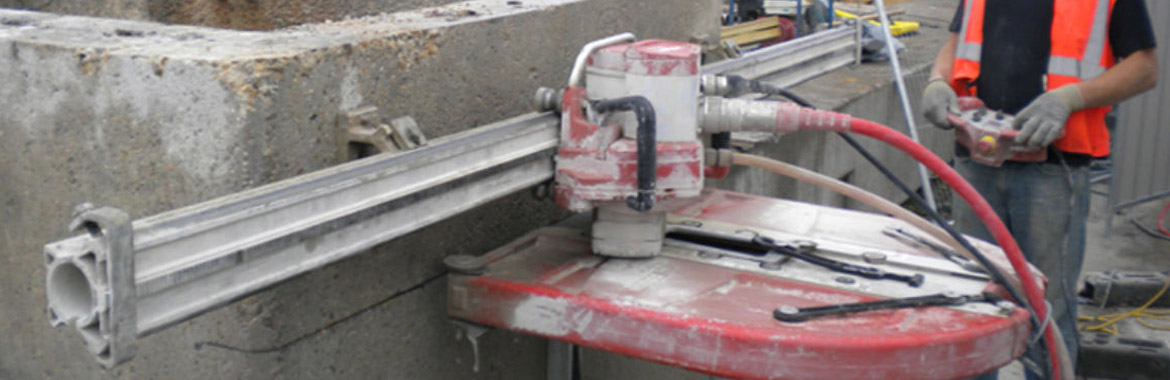
Why Contractors in Kent Prefer Precision Diamond Drilling Techniques
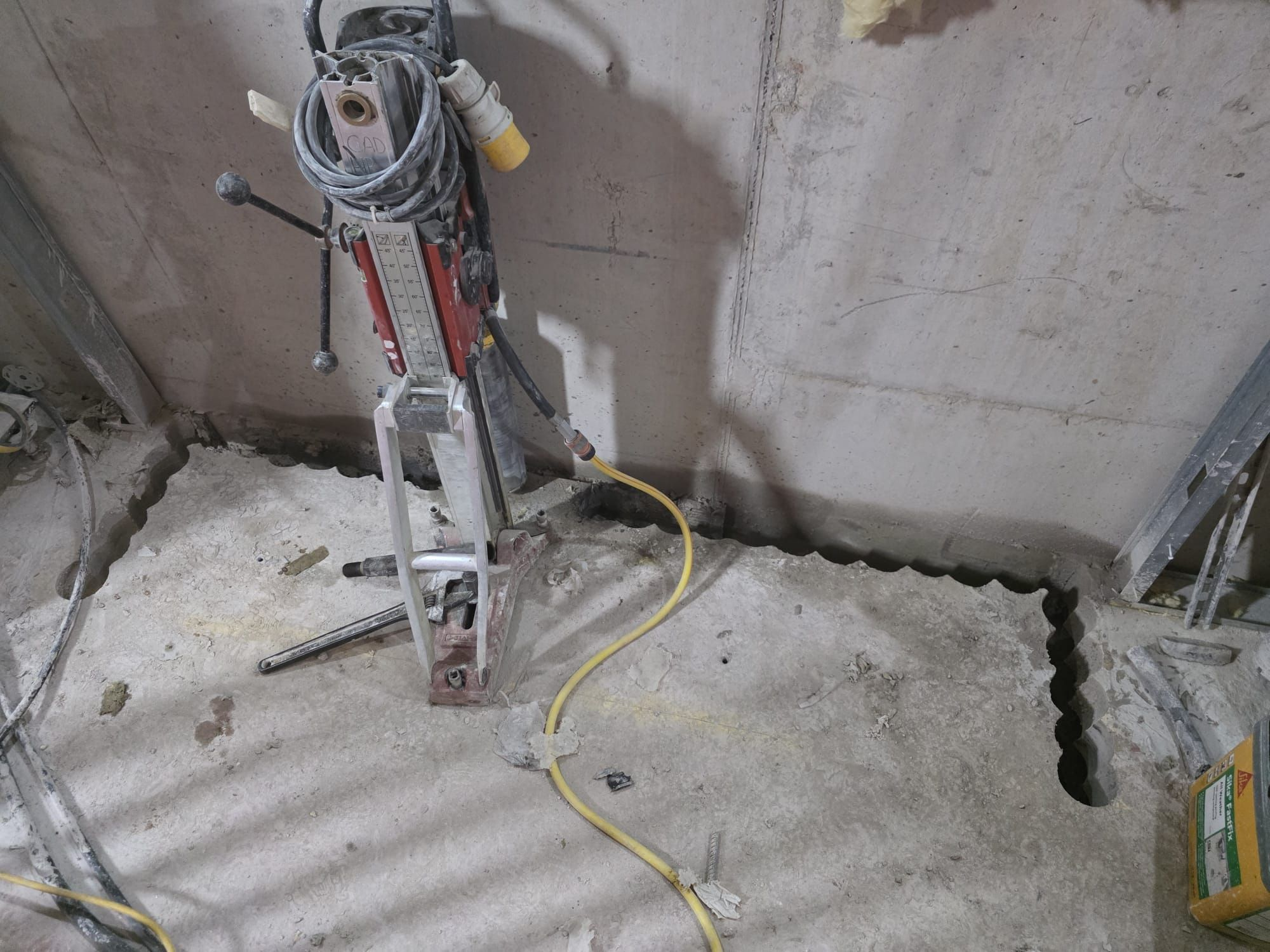
Why Contractors in Kent Prefer Precision Diamond Drilling Techniques
Introduction
Walk onto any active construction site across Kent, from a basement conversion in Tunbridge Wells to a commercial fit-out in Chatham — and you will very likely find a diamond drilling rig actually at work. Over the last decade, precision diamond drilling Kent contractors have adopted this specialist technique as their main way, pretty much moving away from the older, impact-based approaches on projects where accuracy, safety, and structural integrity are simply not negotiable.
But what is it about diamond drilling that earned such steady loyalty with Kent’s most experienced contractors? It comes down to a mix of technical performance, regulatory compliance, day-to-day site safety, and long-term value, all of which this article looks at, in detail.
What Is Precision Diamond Drilling?
Diamond drilling is sort of a core-cutting way, where a hollow cylindrical drill bit embedded with industrial grade diamond segments spins at steady speeds, to cut through concrete reinforced masonry, brick, stone, and block work. Instead of, you know, pounding the material apart by percussion , the bit grinds in a calm way through it, which makes a fairly neat circular opening with only limited harm to the nearby structure.
This method covers a broad set of uses , like service entry holes for plumbing and electrical conduits, structural openings for ducting and drainage, sample removal for materials testing, anchor bolt fixing holes , and even big diameter coring for HVAC and ventilation layouts. In pretty much each case, the key trait is accuracy , and that is exactly why it’s become the real cornerstone of precision concrete drilling Kent specialists provide around the whole region.
Unrivalled Accuracy on Complex Structures
When M&E (mechanical and electrical) engineers specify penetrations through post-tensioned slabs or reinforced concrete cores, the tolerance for error is often measured in single digit millimetres, really. A poorly positioned hole can compromise a fire-compartmentation line, obstruct a structural element, or force costly remedial works that delay the whole programme. And yeah, there is very little room for slippage.
Accurate concrete cutting solutions delivered via diamond drilling remove these risks. Modern drilling rigs can be fixed using vacuum anchor systems or mechanical bolts, keeping the drill at an exact angle — horizontal, vertical, or raked — with no drift during cutting at all. Operators who are used to reinforced concrete surroundings work from marked out fixing points, usually double checked by ground penetrating radar (GPR) surveys done before drilling even starts.
So the outcome is a finished core that lands precisely where the drawing says, every single time. For Kent contractors operating under the close attention of principal contractors, structural engineers, and building control officers, that sort of repeatability is, frankly, invaluable.
Low Vibration Protects Heritage and Sensitive Structures
Kent is home to one of the highest concentrations of listed and heritage buildings in England, honestly. Medieval halls Georgian terraces Victorian viaducts and inter war civic structures are found throughout the county, yes, like from the historic streets of Canterbury and Rochester to the oast houses and manor properties sprinkled across the Weald.
Working in, or even right next to these places demands real extreme caution. Percussive drilling methods send out noticeable vibration through the masonry, and that can do more than people expect. It may loosen aged mortar joints, crack render, shatter glazing and, in the worst cases it can compromise structural stability. On many heritage sites, planning consent and conservation officer guidance will explicitly forbid techniques that generate too much vibration.
Low vibration drilling methods by contrast transmit only a small part of the energy that impact tools produce. That’s why diamond drilling is the approach structural engineers and conservation architects often specify when sensitive fabric is nearby. The same thinking carries over to hospital environments, data centres, server rooms, and precision manufacturing facilities too—basically anywhere vibration sensitive equipment or processes cannot be touched or even nudged.
Contractors who regularly operate across Kent’s varied building stock, already know this in practice, and they invest accordingly. They use diamond drilling equipment designed to guard whatever is around the working area, not just the drill point.
Dust and Noise Control on Occupied Sites
The construction scene across Kent has shifted pretty noticeably. Housing schemes now often need works done inside or right next to homes that are still occupied. Schools get refurbished during term time. Retail centres are doing fit out while shoppers carry on as usual. Office buildings get reconfigured while tenancies stay live.
In every one of those situations, dust and noise management is not just nice-to-have, it is a legal requirement. The Health and Safety Executive, through the control of substances hazardous to health (COSHH) regulations , and the Control of Dust at Work guidance , creates a clear duty for contractors to suppress respirable crystalline silica which is produced in dangerous amounts by dry percussion drilling through concrete.
Advanced concrete coring services that established Kent contractors provide, typically include wet drilling systems as standard. Water gets pumped continuously to the cutting face, so the slurry catches the silica loaded dust before it has a chance to become airborne. As a result the occupational health risk for operatives and nearby workers drops dramatically, and it also reduces the need for long deep cleaning of adjacent areas, plus the usual reliance on mechanical ventilation.
Noise wise, diamond drilling runs at substantially lower decibel levels than hammer drilling, it can be around 20 to 30 dB quieter. That gap can be the difference between a method that fits the site noise management plan and one that sparks complaints, enforcement visits , or an outright pause on works. For contractors working under tight programmes, the calmer on site noise profile of diamond drilling turns into a practical competitive advantage
Technical Capability Across the Full Spectrum of Projects
One of the most compelling reasons specialist drilling contractors Kent professionals keep on investing in diamond drilling is the sheer range of projects this technique can serve, like seriously. For example entry-level core drilling rigs manage diameters from 12 mm to around 300 mm and they’re compact enough to work inside tight plant rooms or even within service risers. Meanwhile larger track-mounted rigs push core sizes out to 1,500 mm and sometimes past that, so they can accommodate major HVAC runs, drainage routes and wider infrastructure penetrations too.
Because of that, one specialist subcontractor can cover a domestic groundworks package in Sevenoaks, a hospital infrastructure upgrade in Dartford, and a multi-storey car park extension in Ashford— all using the same fundamental approach, just scaled to fit each specific site.
Kent’s geographical position also creates a few particular demands. Being close to High Speed 1, the Channel Tunnel Rail Link, and the Thames Estuary infrastructure corridor means a lot of contractors end up working on or near Network Rail possessions, where low-vibration methods and compact equipment really matter. Track-mounted diamond drilling rigs, with quick set up times, are essentially engineered for those exact conditions.
Integrated Surveying and Structural Compliance
No discussion of professional core drilling services in Kent would be complete without mentioning the pre-drilling survey process. Cutting through reinforced concrete without first mapping the internal reinforcement and any embedded services is not just bad practice, it is a potential catastrophe. Severing a post-tensioned tendon can bring about immediate and then progressive structural failure. Cutting through a live electrical or data cable can endanger people, and it can quickly turn into six-figure liability claims, sometimes even more.
Established diamond drilling contractors across Kent now routinely do, or arrange, GPR scanning as a kind of compulsory step before any core cutting. Those GPR surveys pinpoint rebar positions and post-tensioning cables, they also show embedded conduits and even highlight voids inside the concrete. With that information the drilling team can pick core locations that dodge every hazard.
This kind of integration, survey and interpretation then precision drilling, into one managed workflow is a real sign of an operation that takes things seriously. Clients who hire a contractor that can own the entire process typically get clearer accountability, faster back and forth with the design team, and one single point of responsibility if any technical questions pop up during construction.
Whole-Life Cost Efficiency
On the surface, day rates for specialist diamond drilling can look higher than those paid to general groundworks operatives running conventional drilling gear. But the full economic picture, it seems to me, always leans towards precision methods… even if the first glance is pretty misleading.
Cores drilled properly, first time, don’t call for remedial patching ,no structural repair, and no rework of nearby finishes. Neat, clean edged openings take fire stopping collars, cable glands, and sleeve systems without any fuss, no alteration, not even extra packing. Lower vibration means fewer headaches, fewer claims for cracked tiles, damaged plasterwork, and broken glazing. Plus, integrated dust suppression removes the extra spend on specialist cleaning and any HVAC decontamination, so it doesn’t linger.
When those avoided costs are totalled up, and then set against the programme wins you get from working faster, more quietly, and with less disruption, precision diamond drilling pretty much always comes in with a lower whole-life cost than options that appear cheaper at the point of procurement.
Selecting a Specialist Contractor in Kent
Kent gets a solid deal because there are several established contractors around who do the full suite of diamond drilling and concrete coring type work. When anyone is judging who to hire, whether that’s principal contractors or the actual clients, they really should look at a few things, kind of like a quick checklist but not only that:
Operative competence: drillers with CSCS cards (yes, proper credentials), plus clear proof of hands-on experience in reinforced concrete settings. Also, they should have a history of getting results within tight tolerances on sites that are already in use, where people and activities are still going on.
Equipment inventory: you want a mixed fleet, from smaller domestic-scale rigs through to track-mounted systems. Basically, so the correct kit is ready for each job, not a one-size-fits-all approach that can turn messy.
Pre-drilling survey capability: ideally they do their own GPR scanning. If not, then they should have a reliable partnership with a UKAS-accredited scanning specialist, and it should be documented and not just verbal promises.
Insurance and compliance: they should hold public liability, and professional indemnity at levels that actually match the contract value. Along with that, CDM 2015-compliant method statements and risk assessments. This part matters even if the project seems “straightforward”.
Project portfolio: ask for proof of finished work across Kent’s different building and infrastructure categories, heritage, residential, commercial, and civil infrastructure too. The point is to see that they’ve handled the range before, not just a couple of similar jobs in the past.
Conclusion
The consistent preference for precise diamond drilling Kent contractors show across every part of the market isn’t a passing trend, it’s a settled professional consensus, built on clear technical safety, and even commercial benefits. Whether the job is just one careful penetration through a domestic extension slab or a more involved run of large-diameter cores through a live commercial building, the argument for hiring a specialist that merges advanced core drilling technology with pre-drilling survey knowledge and a strict method for dust and noise control is pretty much impossible to ignore.
For contractors who actually care about quality, compliance, and programme certainty, precision diamond drilling becomes the proper benchmark— and CA Drillers are the crew Kent contractors call when that benchmark truly matters.
As drilling specialists in Kent delivering the full scope of precision concrete drilling, advanced concrete coring, plus reliable concrete cutting options, from low-vibration residential tasks to major civil infrastructure work, CA Drillers come with a proven history and the know-how required to deliver on projects of all kinds across the South East.
Frequently Asked Questions About Precision Diamond Drilling in Kent
What is precision diamond drilling and how does it differ from standard drilling?
Precision diamond drilling uses a hollow, rotating drill bit embedded with industrial-grade diamond segments to cut clean, accurate cores through concrete, reinforced masonry, and block work. Unlike standard hammer or percussive drilling — which fractures material through repeated impact — diamond drilling grinds smoothly through the substrate, producing a perfectly circular aperture with no cracking, no structural damage to the surrounding area, and far less vibration and dust. It is the preferred method wherever accuracy and site safety are paramount.
Why do contractors in Kent specifically use precision diamond drilling?
Kent's construction environment presents a unique combination of challenges: a high density of heritage and listed buildings, a large number of occupied commercial and residential sites, proximity to sensitive infrastructure such as High Speed 1 and the Thames Estuary corridor, and increasingly stringent planning and building control requirements. Precision diamond drilling addresses all of these demands simultaneously — delivering accurate results with low vibration, suppressed dust, and reduced noise, making it suitable for even the most sensitive and complex sites across the county.
Is diamond drilling safe to use in occupied buildings?
Yes — it is one of the safest concrete cutting methods available for occupied environments. The wet-drilling process used by professional core drilling services captures airborne silica dust as slurry at the point of cutting, significantly reducing the respiratory risk to occupants and operatives. The low noise profile and minimal vibration mean that work can often continue without disrupting day-to-day activity in adjacent areas. CA Drillers follows all HSE COSHH guidelines and CDM 2015 requirements on every project.
What sizes of core can be drilled using diamond drilling techniques?
Diamond drilling is extraordinarily versatile in terms of diameter. Specialist drilling contractors in Kent can drill cores ranging from as small as 12 mm — suitable for fixing anchors and small cable runs — up to 1,500 mm or more for large-scale HVAC, drainage, and infrastructure penetrations. CA Drillers maintains a comprehensive fleet of rigs in various configurations, ensuring the right equipment is deployed for every job, regardless of scale.
Do I need a survey before diamond drilling takes place?
In virtually all cases involving reinforced concrete, yes. A ground-penetrating radar (GPR) survey should always be conducted before drilling commences to map the location of rebar, post-tensioning cables, and any embedded electrical or data services within the slab or wall. Drilling without this information risks severing post-tensioned tendons — which can cause catastrophic structural failure — or damaging live services. CA Drillers integrates pre-drilling GPR surveys into its stan
- Search
- Categories
- Blog
- Brokk demolition
- Certificate
- Concrete Cutting
- Controlled Demolition
- Core Drilling
- core drilling Kent
- Diamond Concrete Cutting
- Diamond Concrete Drilling
- Diamond Drilling
- Diamond Drilling Essex
- Diamond drilling Kent
- Diamond Drilling Surrey
- Diamond Sawing
- Fire doors
- Floor Preparation
- Hydraulic Bursting
- Kent construction drilling
- Magnetic Drilling
- Passive Fire Protection
- Stitch Drilling
- Wire Sawing Services
- Archives