
Common Mistakes to Avoid When Hiring a Concrete Drilling Contractor
Common Mistakes to Avoid When Hiring a Concrete Drilling Contractor
Every year, London developers, main contractors, and property owners lose time and money over one avoidable decision: choosing the wrong drilling contractor. With the capital’s construction sector busier than ever, the demand for diamond drilling in London has never been higher — but not every contractor advertising these services has the experience, equipment, or accreditation to deliver safely on a live site.
A poorly chosen Concrete Drilling contractor can mean cracked slabs, severed cables, blown programmes, and repair bills that dwarf the original quote. This guide walks through the most common mistakes people make when hiring a drilling contractor, so you can avoid them on your next project.
Choosing on Price Alone
The cheapest quote is rarely the best value. A rock-bottom price often means a contractor is cutting corners on equipment quality, insurance, or trained labour — all of which become your problem the moment something goes wrong.
Before accepting any quote, check that it clearly includes:
- Labour and mobilisation
- Equipment and consumables
- Access and site setup requirements
- Number, size, and depth of holes
- Waste and slurry management
- Any additional site-specific requirements
A specialist offering diamond drilling in London should be able to break a quote down line by line. If a price looks too good to be true against others offering concrete drilling services London teams rely on, ask why — it usually means something has been left out.
Not Checking for Concrete Scanning Before Drilling
This is one of the most expensive mistakes in the industry. Drilling blind into reinforced concrete without first scanning for hidden rebar, post-tension cables, or live services can cause structural damage, safety incidents, and programme delays running into weeks.
A competent contractor carrying out reinforced concrete drilling should always scan the area with GPR (ground-penetrating radar) or a covermeter before cutting a single hole. If a contractor doesn’t mention scanning as standard practice, treat that as a red flag rather than an oversight.
Ignoring Accreditations and Safety Credentials
Drilling and cutting work on a construction site isn’t something to hand to whoever is available fastest. Before appointing a contractor, ask for evidence of:
- CSCS-accredited operatives
- Site-specific risk assessments and method statements
- Recognised industry accreditations (CHAS, SafeContractor, ISO 45001, ISO 9001)
- Adequate public liability insurance — ideally £5 million or more
CA Drillers holds CSCS, CHAS Elite, SafeContractor, ISO 45001 and RISQS accreditation, among others, and every operative carries qualifications such as SMSTS, NVQs, IPAF and PASMA. If a contractor can’t produce this paperwork on request, it’s worth asking why.
Overlooking Experience With the Specific Type of Job
Not all drilling and cutting work is the same. A contractor who has only handled small domestic jobs may struggle with a live commercial basement, a heritage building, or a deep structural penetration through a post-tensioned slab.
Before hiring, ask whether the contractor has genuine experience in:
- Commercial and civil engineering projects
- Rail and transport infrastructure
- Industrial and residential developments
- Reinforced concrete and structural alterations
CA Drillers has operated since 1981, with more than 45 years of experience ranging from single penetrations to multi-million-pound contracts across London and the South East.
Assuming All Equipment and Techniques Are the Same
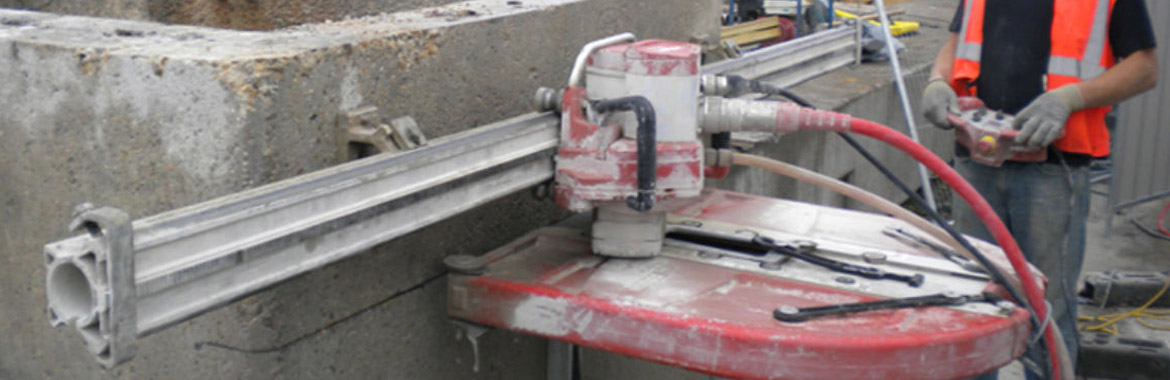
The right tool for the job matters more than the biggest toolkit. Whether your project needs core drilling services, stitch drilling, track sawing, or wire sawing depends on hole diameter, access, concrete type, and dust or slurry control requirements. A contractor should ask about these details before quoting — not after arriving on site.
For projects involving dense or heavily reinforced sections, look for a team offering genuine precision concrete drilling, not a generalist builder using standard masonry bits. The wrong equipment on reinforced concrete can mean snapped bits, oversized holes, and costly rework.
Failing to Confirm Access, Programme, and Site Constraints
A contractor should understand your site conditions and programme before work starts — not discover them on day one. This is especially important on live construction or infrastructure sites where other trades are working around the drilling team.
A useful question to ask any contractor bidding for concrete cutting services is: how will you complete this work without affecting the surrounding structure, other trades, or our programme? A vague answer here tells you more than any brochure.
Underestimating Noise, Dust, and Vibration Control
London’s environmental and planning standards have tightened considerably. Traditional percussive drilling generates vibration, dust, and noise that can crack plaster, trigger complaints, and breach Party Wall obligations — particularly in occupied buildings, conservation areas, and residential zones.
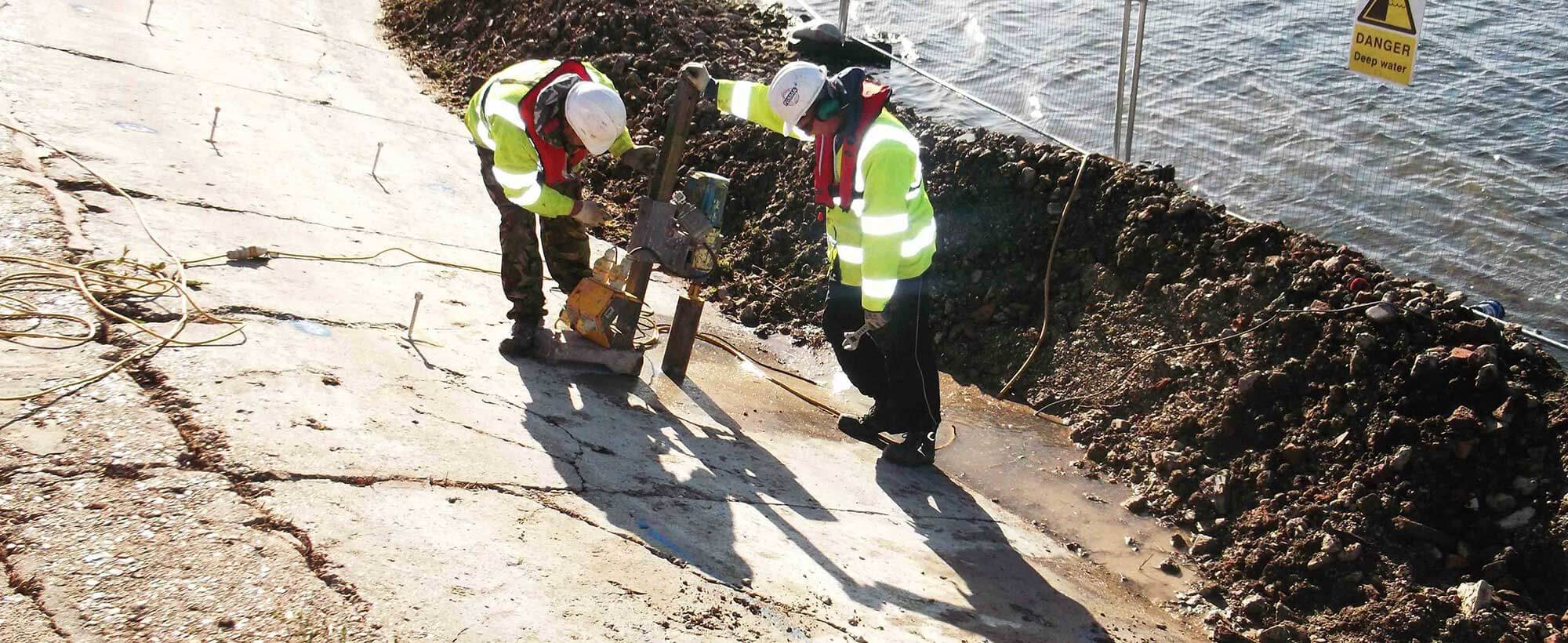
Wet-cut diamond drilling controls dust at the source and produces far lower noise and vibration than older methods, making it suitable for occupied offices, schools, and hospitals. If a contractor can’t explain how they’ll manage dust, slurry, and noise on your site, that’s a gap worth questioning before work begins.
Not Getting Documentation Upfront
Method statements, risk assessments, and COSHH records aren’t paperwork for paperwork’s sake — main contractors need them to meet their own compliance obligations, and they protect you if anything goes wrong on site. A contractor who can’t provide this documentation before work starts isn’t ready for a professional construction environment.
A Simple Contractor Check
Before appointing your next contractor, confirm five things:
Experience → Safety → Equipment → Scanning → Clear Pricing
If all five hold up, you have a much stronger basis for your decision — and a far lower chance of costly surprises mid-project.
Hire With Confidence
Choosing a contractor for diamond drilling in London should never come down to whichever quote lands first. The right partner brings relevant experience, proper accreditation, the correct equipment for your job, and transparent pricing from the outset.
CA Drillers has provided specialist concrete coring, cutting, and drilling services across London and the South East for more than 45 years, working on projects for main contractors including Mace, Costain, BAM, and Erith Group. Every job starts with a proper site survey and concrete scan, and every operative works to BS EN 12504 standards.
Planning your next project? Contact CA Drillers to discuss your requirements and request a free, no-obligation quotation.
Frequently Asked Questions
Q1. What's the biggest mistake people make when hiring a drilling contractor?
Choosing based on price alone, without checking accreditations, insurance, or whether the contractor scans for hidden services before drilling.
Q2. Why is concrete scanning so important before drilling?
Drilling without scanning risks hitting embedded rebar, post-tension cables, or live services, which can cause structural damage, safety incidents, and expensive delays.
Q3. What accreditations should a concrete drilling contractor hold?
Look for CSCS-accredited operatives, CHAS or SafeContractor status, ISO 9001/45001 certification, and public liability insurance of at least £5 million.
Q4. Is diamond drilling suitable for occupied buildings?
Yes. Wet-cut diamond drilling produces minimal dust, noise, and vibration, making it appropriate for offices, schools, hospitals, and residential properties still in use.
Q5. How can I compare quotes fairly between contractors?
Ask each contractor to break down labour, equipment, access requirements, hole specifications, and waste management for the same scope of work, so you're comparing like for like.
- Search
- Categories
- Blog
- Brokk demolition
- Certificate
- Concrete Cutting
- Controlled Demolition
- Core Drilling
- core drilling Kent
- Diamond Concrete Cutting
- Diamond Concrete Drilling
- Diamond Drilling
- Diamond Drilling Essex
- Diamond drilling Kent
- Diamond Drilling Surrey
- Diamond Sawing
- Fire doors
- Floor Preparation
- Hydraulic Bursting
- Kent construction drilling
- Magnetic Drilling
- Passive Fire Protection
- Stitch Drilling
- Wire Sawing Services
- Archives