
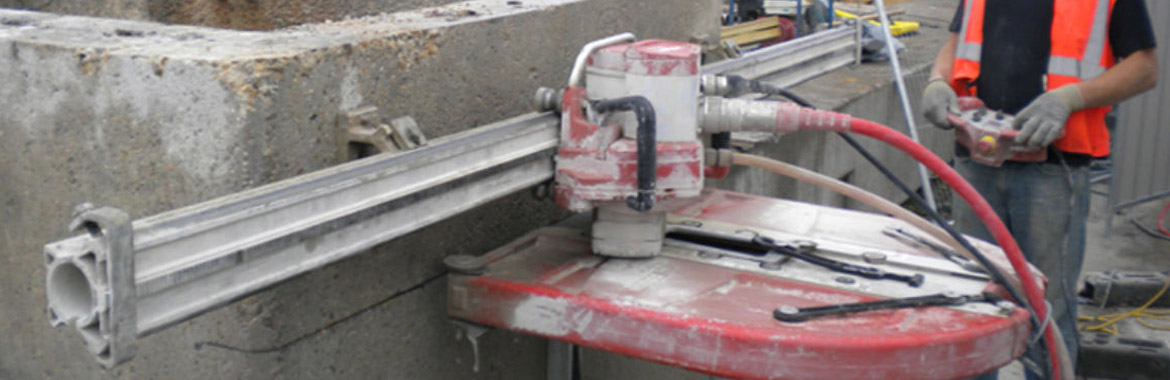
The Role of Diamond Drilling in Commercial Construction Projects ?

The Role of Diamond Drilling in Commercial Construction Projects ?
Commercial construction in the UK has never been more demanding. Tighter project timescales, stricter planning regulations, and increasingly complex structural requirements mean that contractors cannot afford to cut corners — or to use the wrong cutting method. That is exactly why diamond drilling has become the go-to solution for commercial construction projects of every scale, from office refurbishments in the City of London to large-scale infrastructure builds across the South East.
At CA Drillers, we have delivered precision diamond drilling services on some of the most high-profile commercial projects in the UK — including Crossrail, Chelsea Barracks, London City Airport, and the Old War Office. In this guide, we explore why diamond drilling is now central to modern commercial construction, and what sets professional diamond core drilling apart from conventional methods.
What Is Diamond Drilling and Why Does It Matter in Commercial Construction?
Diamond drilling is a precision cutting technique that uses rotating, diamond-tipped core bits to create clean, accurate holes through reinforced concrete, masonry, brick, and stone. Unlike percussive or rotary hammer drilling, diamond drilling produces no impact force — meaning no cracking, no structural stress, and no risk of damaging the surrounding material.
In a commercial construction setting, that level of control is not a luxury; it is a requirement. Whether you are installing mechanical and electrical services through a post-tensioned slab, creating structural penetrations in a reinforced concrete frame, or creating openings for new fire suppression systems, the precision delivered by concrete core drilling is unmatched by any alternative method.
The wet-cutting process — in which water is used to cool the diamond bit during operation — simultaneously suppresses dust, reduces noise, and eliminates heat transfer to adjacent materials. This makes precision diamond drilling suitable for use in occupied commercial buildings, sensitive heritage structures, and sites operating under strict environmental controls.
Key Applications of Diamond Drilling in Commercial Projects
Commercial construction projects call upon diamond drilling services across a wide range of applications. Understanding these use cases helps project managers and main contractors plan more effectively and avoid costly programme delays.
Structural Penetrations and Core Holes
Every commercial building requires a network of penetrations through floors, walls, columns, and ceilings to accommodate mechanical, electrical, and plumbing (MEP) services. Concrete drilling through reinforced or post-tensioned slabs demands exact placement and controlled execution. A misaligned or poorly executed hole in a post-tensioned floor can sever a tendon cable — resulting in significant structural remediation costs and weeks of programme delay.
At CA Drillers, every structural penetration begins with a GPR (Ground Penetrating Radar) concrete scan to locate embedded reinforcement, post-tension cables, and hidden services before a single hole is drilled. It is a step that protects your structure, your programme, and your budget.
HVAC, Mechanical, and Ventilation Installations
The installation of modern HVAC systems, air handling units, heat pump pipework, and mechanical ventilation in commercial buildings consistently requires concrete core drilling through existing floor plates and structural walls. In retrofit and refurbishment projects — which now account for a growing proportion of commercial construction activity in the UK — this work is often carried out in occupied or semi-occupied premises, where dust, noise, and vibration must be kept to an absolute minimum.
Diamond drilling services are specifically engineered for these conditions. The process is quiet enough to operate in an occupied office environment and clean enough to work in healthcare and educational facilities without the need for extensive containment.
Fire Stopping and Passive Fire Protection
Compliance with UK fire safety regulations has become more rigorous in recent years, particularly following the updates to Approved Document B and the ongoing impact of the Building Safety Act 2022. Creating correctly sized and positioned core holes through fire-rated compartment walls and floors is a critical step in ensuring that fire stopping and passive fire protection systems can be installed to the required standard.
Precision diamond drilling produces a clean, smooth bore that ensures fire stopping products can be applied correctly and that the overall integrity of the fire compartment is maintained. CA Drillers works alongside passive fire protection contractors on commercial projects across London and the South East, delivering core holes that meet exact specification every time.
Lift Pits, Plant Rooms, and Sub-Surface Works
Commercial developments frequently require diamond drilling for the creation of drainage channels, lift pit penetrations, sump installations, and plant room service entries. These applications typically involve working in confined or below-ground environments with limited access. CA Drillers operates compact, rig-mounted diamond drilling equipment designed specifically for restricted-access locations — without compromising on accuracy or output.
Why Commercial Contractors Choose Diamond Core Drilling Over Traditional Methods
The shift away from percussive drilling and towards diamond core drilling in commercial construction has been driven by three clear factors: compliance, programme efficiency, and structural safety.
Compliance is increasingly non-negotiable. London boroughs, local planning authorities, and site-specific Party Wall agreements often place strict limitations on vibration levels, noise output, and dust emissions. Concrete drilling using diamond techniques consistently falls within these limits, whereas percussive drilling frequently does not.
Programme efficiency is another decisive factor. Diamond drilling delivers clean, accurate results at speed. There is no secondary remediation of ragged or oversized holes, no structural repair work to cracked concrete, and no rework caused by incorrectly positioned penetrations. When you are working to a tight commercial programme, that reliability has a direct financial value.
Structural safety underpins everything. Post-tensioned concrete is now commonplace in UK commercial buildings, and the consequences of striking a tendon cable during drilling are severe. Professional diamond drilling services combine pre-drill scanning, experienced operatives, and calibrated equipment to eliminate this risk.
What to Look for in a Diamond Drilling Contractor for Commercial Projects
Not every drilling contractor operating in the UK market is equipped to handle the demands of complex commercial construction. When selecting a provider of diamond drilling services for your project, there are several criteria that should be non-negotiable.
Look for contractors who hold CSCS-certified operatives, carry public liability insurance of at least £5 million, and operate with full ISO 9001 and ISO 14001 accreditations. Concrete scanning capability is essential — any contractor unwilling or unable to conduct a pre-drill scan before working on reinforced or post-tensioned structures should not be on your shortlist.
Evidence of relevant commercial project experience matters too. CA Drillers has delivered concrete core drilling on projects ranging in value from £50,000 to £2.5 million, working with principal contractors including Mace, BAM Construction, Costain, and Ardmore Construction. Our project portfolio demonstrates the full range of commercial applications in which we operate, from live airport environments to occupied office refurbishments.
CA Drillers: Precision Diamond Drilling for Commercial Construction
CA Drillers is one of the UK’s leading specialist contractors for diamond drilling, concrete drilling, and diamond core drilling across commercial, infrastructure, and heritage projects. Operating from offices in London, Kent, and Surrey, our teams are mobilised rapidly across the South East — with emergency same-day call-out available for programme-critical situations.
Every project we deliver is underpinned by a rigorous pre-works process: concrete scanning, method statement preparation, risk assessment, and a full COSHH review. We work in full compliance with BS EN 12504 and operate across all sectors including commercial offices, residential developments, healthcare, education, transport infrastructure, and industrial facilities.
If your commercial construction project requires expert precision diamond drilling or diamond drilling services, contact CA Drillers today for a fast, competitive quotation.
Frequently Asked Questions
Q: What is the difference between diamond drilling and concrete cutting?
Diamond drilling creates circular core holes through concrete and masonry, typically for service penetrations and structural openings. Concrete cutting refers to straight-line cuts used to remove sections of concrete — both techniques use diamond-tipped tooling and are offered by CA Drillers as part of our full service range.
Q: Can diamond drilling be carried out in an occupied commercial building?
Yes. The wet-cut diamond drilling process produces minimal noise, no airborne dust, and very low vibration — making it the preferred method for occupied offices, hospitals, schools, and retail premises.
Q: How do you ensure you do not hit reinforcement or cables when drilling?
CA Drillers uses GPR (Ground Penetrating Radar) concrete scanning prior to every drilling operation to identify the location of reinforcement bars, post-tension cables, and embedded services. This step is included as standard on all commercial contracts.
Q: Do you provide method statements and risk assessments for commercial projects?
Yes. CA Drillers provides full pre-works documentation including method statements, risk assessments, COSHH data sheets, and toolbox talk records as standard, in line with the requirements of principal contractors and CDM regulations.
- Search
- Categories
- Blog
- Brokk demolition
- Certificate
- Concrete Cutting
- Controlled Demolition
- Core Drilling
- core drilling Kent
- Diamond Concrete Cutting
- Diamond Concrete Drilling
- Diamond Drilling
- Diamond Drilling Essex
- Diamond drilling Kent
- Diamond Drilling Surrey
- Diamond Sawing
- Fire doors
- Floor Preparation
- Hydraulic Bursting
- Kent construction drilling
- Magnetic Drilling
- Passive Fire Protection
- Stitch Drilling
- Wire Sawing Services
- Archives