
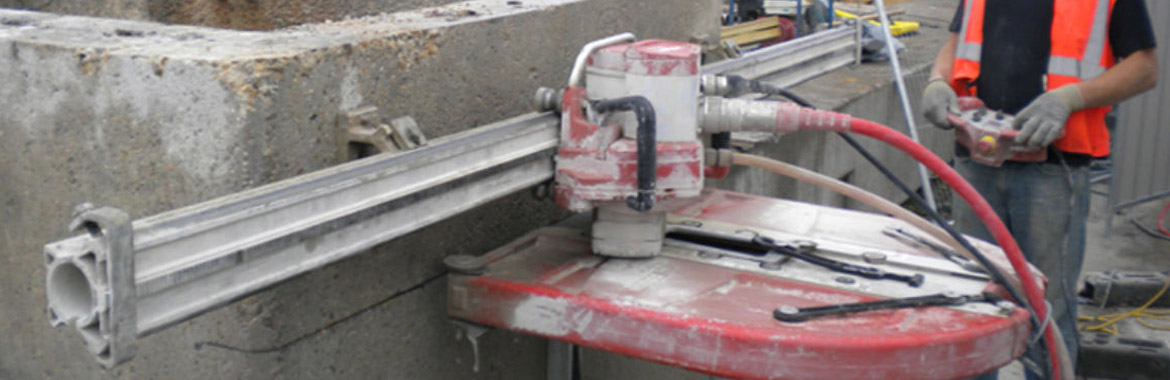
Searching Diamond Drilling Near Me? Here’s What Separates the Pros from the Rest
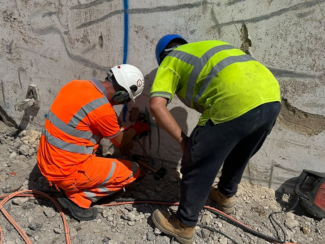
Searching Diamond Drilling Near Me? Here's What Separates the Pros from the Rest
Objectives
This blog exists to help anyone typing “diamond drilling near me” into Google actually make a sensible decision once the results load. That means:
- Explaining what diamond drilling really involves, beyond the obvious “drill goes into wall”
- Showing what separates a proper specialist from a builder who happens to own a core rig
- Pointing out which accreditations are worth checking and why
- Helping you avoid the kind of mistakes that turn a routine job into a very expensive one
Key Takeaways
- Diamond drilling is a precision trade. Get the wrong contractor and you risk cracked slabs, severed services, or a bill that’s crept miles past the original quote.
- Accreditations like CSCS, CHAS, and ISO certifications aren’t just paperwork they’re a decent proxy for how seriously a company takes safety and competence.
- Equipment condition changes the outcome more than most people expect. Old, poorly maintained rigs are slower and messier.
- A contractor’s local presence and fleet size often matter more than their marketing does when you actually need someone on-site fast.
- Honesty at the quoting stage clear scope, no vague pricing is usually the first real sign you’re dealing with a professional.
Introduction
Search “diamond drilling near me” and Google hands you a wall of options in under a second. What it doesn’t do is tell you which of those companies will show up with the right kit and the right people, and which will leave you with a hairline crack running through a slab that used to be fine.
From the outside, diamond drilling looks almost too simple a rig, a diamond-tipped bit, a clean hole. In reality, it’s a trade that depends on reading the substrate correctly, anchoring the rig properly, knowing where the services are hiding, and managing dust and water without turning a site into a mess. On a live commercial or industrial site, get any one of those wrong and it stops being a minor issue.
This guide is really about narrowing that search down to something useful so “near me” stops being the only filter you’re using.
Table of Contents
- What Diamond Drilling Actually Involves
- Specialist vs. General Contractor Why It Matters More Than You’d Think
- Accreditations Worth Checking Before You Hire
- Why Equipment Quality Changes the Outcome
- Local Coverage and How Fast Someone Can Actually Get to You
- Mid-Article CTA: Talk to Someone Before You Commit
- Questions People Usually Have Before Hiring
- Where This Leaves You
- Final CTA: Get a Free Quot
- FAQs
What Diamond Drilling Actually Involves
Diamond core drilling uses industrial bits tipped with diamond to cut through concrete, brick, and masonry cleanly, with minimal vibration, and without chewing up the material around the hole. That’s why it’s become the go-to method on professional sites: it’s fast, it’s accurate, and it doesn’t shake the building apart in the process, which matters a lot more than people assume when you’re working in an occupied hospital wing or next to a live railway.
None of that happens automatically, though. Precision comes from the person running the rig, not the rig itself. Get the anchoring wrong, misjudge what’s behind the wall, or miss a cable that should’ve been scanned for first, and a two-hour job becomes a two-week repair bill. That’s really the whole point of this article “diamond drilling near me” should lead you to competence, not just the closest van.
Specialist vs. General Contractor Why It Matters More Than You’d Think
A lot of general builders own a core drill. Far fewer have spent years sometimes decades figuring out how to use one properly across every kind of substrate and site condition you can throw at them.
Here’s what tends to separate the two in practice:
- A dedicated Contracts Manager scopes the job properly before anyone picks up a drill
- The operatives are trained specifically for drilling, not just construction in general
- They’ve likely worked across commercial fit-outs, rail infrastructure, heritage buildings, and residential jobs so they’ve seen the edge cases already
- They can handle a single penetration for an M&E subcontractor on Monday and a multi-million-pound infrastructure package on Tuesday, without the standards slipping between the two
A company that’s been at this since the early 1980s has, frankly, already made most of the mistakes a newer outfit is still going to make on your job. That’s not a small thing.
Accreditations Worth Checking Before You Hire
It’s tempting to wave accreditations off as box-ticking exercises, but on a drilling site they translate into fairly concrete outcomes. Worth checking for:
- CSCS cards confirms the people on-site are actually trained and competent, not just experienced by osmosis
- CHAS Elite or Safe Contractor Approved status independently audited health and safety compliance, not self-reported
- ISO 9001, 14001, 45001 quality, environmental, and occupational health management, respectively
- Role-specific tickets like SMSTS, NVQs, IPAF, PASMA, Confined Space, or EUSR, depending on what the job needs
If a contractor can’t produce this on request, take that seriously. It’s not a minor technicality you overlook because the quote came in £200 cheaper.
Why Equipment Quality Changes the Outcome {#equipment}
The condition of the drills and cutting equipment being used affects your project more directly than most clients expect. Better-maintained rigs generally mean:
- Cleaner holes with less damage to the surrounding structure
- Faster completion which matters when you’re paying for every hour of site downtime
- Proper dust and water suppression, especially important in occupied or sensitive buildings
- Fewer breakdowns halfway through, which is exactly when you can least afford one
Contractors who keep investing in their fleet, rather than running the same rigs into the ground for a decade, tend to be the ones who can actually back up what they’re promising you.
Local Coverage and How Fast Someone Can Actually Get to You
When you type “diamond drilling near me,” you’re not really searching for proximity you’re searching for someone who can turn up when your programme needs them, not whenever they happen to have a gap.
This is where fleet size and workforce depth actually matter. A contractor running three vans across a huge patch is going to struggle when you need someone tomorrow. A company with a proper fleet, a large enough pool of trained operatives, and offices spread across a few regions can usually mobilise at short notice and on a live construction programme, that gap between “next week” and “tomorrow morning” can be the difference between staying on schedule and quietly falling behind.
Talk to Someone Before You Commit
Still not sure whether your site needs a specialist?
Before you book the first name that comes up, it’s worth a short call with a Contracts Manager who can actually look at your project substrate, access, live services, timeline and tell you honestly what’s involved and what it’ll take.
Request a Free, No-Obligation Quote →
Or call 0800 975 0891 to speak with someone directly.
Questions People Usually Have Before Hiring
Is diamond drilling only worth it for big commercial jobs?
Not at all. It’s used for everything from a single penetration for an M&E contractor through to multi-million-pound infrastructure schemes. The scale changes the level of precision needed really doesn’t.
Can it be done on a site that’s still occupied or operational?
Yes, and honestly it’s usually the preferred method for exactly that reason. Low vibration and minimal disruption make it a much safer bet than breaking or percussive drilling in a live environment.
Does a lower quote usually mean lower quality?
Not automatically, but it’s worth asking why the price is lower. Does it include service detection? What accreditations do the operatives actually hold? Price alone doesn’t tell you much on its own.
How do I actually tell if a company is a specialist or just a generalist with a drill?
Ask them directly how much of their work is drilling and cutting versus general building. A genuine specialist will answer that without hesitating, and usually has named accreditations and past projects ready to point to.
Where This Leaves You
Next time you’re searching, remember the location filter only gets you a list. It’s everything after that accreditations, equipment, response time, honesty at the quoting stage that actually decides whether the job goes well.
Get a Free Quote
Looking for diamond drilling near you that’s backed by decades of actual experience, not just a nearby postcode?
CA Drillers has been delivering diamond drilling and concrete cutting across the UK since 1981, with CSCS-accredited operatives, CHAS Elite and Safe Contractor Approved status, and coverage across London, Kent, Surrey, Essex, and beyond.
📞 0800 975 0891 | ✉️ info@cadrillers.com
Frequently Asked Questions
What should I actually look for when searching "diamond drilling near me"?
Check accreditations first CSCS, CHAS, ISO certifications then look at their track record on similar projects, and see whether they'll give you a clear, site-specific quote instead of a vague number over the phone.
How fast can a contractor actually get to my site?
Depends heavily on how big their fleet and workforce is. Larger contractors with a few regional offices tend to mobilise faster than a small operator covering the same area alone.
Will diamond drilling disturb people working nearby?
It's noticeably quieter and lower-vibration than percussive drilling or breaking, which is exactly why it's the default choice for hospitals, occupied offices, and live rail environments.
Do I need to worry about underground services before drilling starts?
Yes and any contractor worth hiring will handle that check as standard, before the rig even goes near the wall.
Can one contractor handle both drilling and concrete cutting?
Often, yes. Many specialists cover floor sawing, wire sawing, track sawing, and stitch drilling too, so it's worth asking rather than assuming you'll need two separate companies.
- Search
- Categories
- Blog
- Brokk demolition
- Certificate
- Concrete Cutting
- Controlled Demolition
- Core Drilling
- core drilling Kent
- Diamond Concrete Cutting
- Diamond Concrete Drilling
- Diamond Drilling
- Diamond Drilling Essex
- Diamond drilling Kent
- Diamond Drilling Surrey
- Diamond Sawing
- Fire doors
- Floor Preparation
- Hydraulic Bursting
- Kent construction drilling
- Magnetic Drilling
- Passive Fire Protection
- Stitch Drilling
- Wire Sawing Services
- Archives