
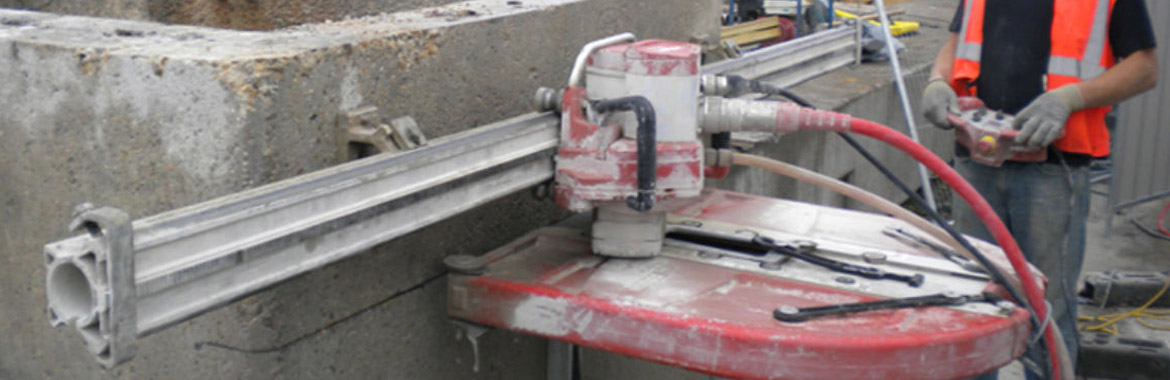
Brokk Demolition for Controlled & Remote-Controlled Demolition in London, Kent & Surrey
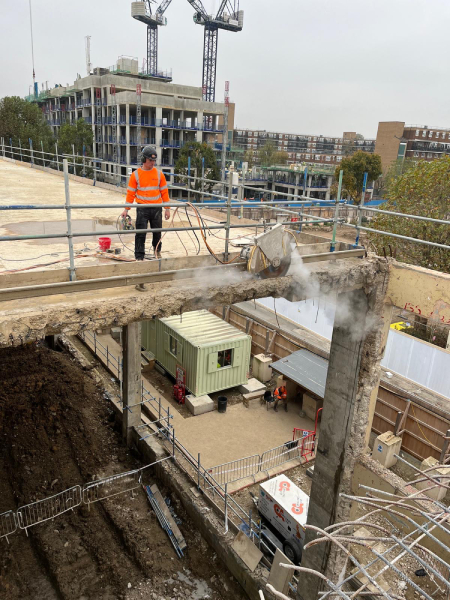
Brokk Demolition for Controlled & Remote-Controlled Demolition in London, Kent & Surrey
What if demolition in tight city spaces could be safer, calmer, and far more controlled without putting people in harm’s way?
That question comes up a lot when we speak with contractors and project managers working in busy UK cities. Here’s the thing: urban demolition has changed. Traditional methods still have their place, but they often struggle in confined sites, occupied buildings, and locations with strict safety rules.
According to guidance from the Health and Safety Executive, demolition remains one of the higher-risk construction activities, especially where workers operate close to unstable structures. This is exactly where Brokk demolition steps in as a practical, modern answer.
In simple words, Brokk demolition uses compact electric machines that operate at an appropriate distance. The machines can cut concrete, remove sections of structural components, and operate inside buildings with more precision than manual methods.
For urban sites across London, Kent, and Surrey, this approach reduces risk, limits noise and dust, and gives teams better control over every stage of the work.
Key takeaways
- Improved safety by keeping operators away from danger zones
- Greater control for selective and controlled removal
- Lower disruption for neighbours and nearby businesses
- Ideal for urban settings where access and space are limited
How Robotic Demolition Improves Safety and Precision on Urban Sites
Urban projects rarely allow room for error. Buildings sit close together, access routes are narrow, and safety plans face heavy scrutiny. This is why robotic solutions are now part of many city demolition strategies.
Robotic demolition machines are compact but powerful. Operators control them from a safe distance, often from another room or behind protective barriers. What this really means is fewer people exposed to falling debris, vibration, or unstable surfaces.
Why robotic demolition is safer than manual methods
- Operators should stay clear of high-risk areas
- Machines provide a constant force with no sudden movements
- Work continues to be done safely in zones that are not safe for people
Controlled demolition for sensitive urban buildings
Controlled demolition allows teams to remove only what is needed. That matters when working in hospitals, offices, or residential buildings where other areas remain in use. Vibration stays low, dust stays manageable, and surrounding structures remain protected.
Why Remote-Controlled Demolition Works So Well in London, Kent & Surrey
Every region has its own building styles, access limits, and local rules. In and around cities, space is often the biggest issue.
Remote operation makes a real difference..
With remote-controlled demolition, operators guide machines with a clear sight of the task, without standing next to the structure. This improves judgment and reduces pressure during complex work.
Meeting regional demands
Across demolition London/Kent/Surrey projects, teams often face:
- Tight schedules
- Live environments
- Noise and dust limits
Remote-controlled machines help meet these demands without cutting corners on safety.
|Want fewer delays and better control on site? This method changes how urban demolition is handled.|
Where Robotic Demolition Fits Best in Modern Construction
Not every job needs robotic machines, but many urban projects benefit from them.
Structural changes and refurbishments
When altering existing buildings, precision matters. Robotic machines remove concrete and structural elements without damaging surrounding areas. This helps keep refurbishment projects on track.
Working inside occupied buildings
We have seen first-hand how robotic demolition allows work to continue in buildings that remain open. Offices keep running. Hospitals stay operational. Noise and vibration stay within acceptable limits.
Specialist Demolition Services and Project Safety Across the UK
Experience still matters. Machines alone do not guarantee results.
Why skilled teams matter
Reliable demolition services UK focus on planning as much as execution. Method statements, surveys, and risk assessments guide each phase of the work.
Planning before breaking ground
- Structural assessments
- Clear work sequencing
- Security controls are aligned with UK laws
These steps minimise unexpected surprises and help protect all visitors.
Traditional Methods vs Robotic Demolition: A Practical Comparison
Urban contractors often ask whether robotic methods are worth it. Let’s break it down.
| Aspect | Traditional Methods | Robotic Demolition |
| Worker safety | High exposure | Operators work remotely |
| Precision | Limited | Very high |
| Noise & vibration | Often high | Significantly reduced |
| Confined spaces | Difficult | Well suited |
This shift explains why Brokk demolition now appears in more urban project plans than ever before.
When Should You Choose Robotic Demolition for Your Project?
Some signs point clearly toward robotic solutions.
Your site may need it if
- Access routes are narrow
- Structural control is critical
- Safety risks are elevated
Working with the right specialists
Experienced demolition services UK combine skilled operators, correct machines, and careful planning. The balance is designed to ensure that the demolition process is safe and doesn’t cause any disruption.
Smarter Demolition Starts with the Right Technology
Urban demolition doesn’t have to be noisy, dangerous or disruptive. With the right plan and tools, teams will enjoy more control, safer conditions, and more predictable results. Brokk demolition support shifts by placing safety and precision first.
At CA Drillers, we have seen how robotic solutions improve project flow across complex urban sites. When safety, accuracy, and control matter, the method speaks for itself.
CTA: Ready to plan a safer demolition project?
Talk to experts who know the urban challenges and can deliver reliable, controlled outcomes from beginning to end.
Frequently Asked Questions
What is Brokk demolition, and how does it work?
It uses compact, electrically powered machines operated remotely to remove concrete and structural elements with precision.
Is robotic demolition safer than manual demolition?
Yes. Operators avoid vulnerable areas, which reduces the risk of being exposed to common site hazards.
Where is remote-controlled demolition most effective?
Remote-controlled demolition is most effective in restricted areas, buildings that are occupied, and on sites that have high safety standards.
Can this method be used across London, Kent, and Surrey?
Yes. Demolition in London/Kent/Surrey often relies on robotic machines due to space and access limits.
Which buildings benefit most from controlled demolition?
Controlled demolition suits hospitals, offices, residential blocks, and refurbishment projects.
- Search
- Categories
- Blog
- Brokk demolition
- Certificate
- Concrete Cutting
- Controlled Demolition
- Core Drilling
- Diamond Concrete Cutting
- Diamond Concrete Drilling
- Diamond Drilling
- Diamond drilling Kent
- diamond drilling london
- Diamond Drilling Surrey
- Diamond Sawing
- Fire doors
- Floor Preparation
- Hydraulic Bursting
- Magnetic Drilling
- Passive Fire Protection
- Stitch Drilling
- Archives