
Diamond Drilling London: Everything You Need to Know Before Hiring
Diamond Drilling London: Everything You Need to Know Before Hiring
So if you’re planning a construction, renovation, or structural project here in the capital, chances are you’ve bumped into the term diamond drilling already, and maybe not even once. Whether you need openings cut through reinforced concrete, brick, or masonry, picking the proper contractor for diamond drilling London can really make or break your project timeline , and yes, your budget too.
With CA Drillers , we’ve been working across London for years now, helping homeowners, builders, and property developers get clean and really precise outcomes safely and efficiently. This little guide has pretty much everything you should know before you lift the phone or type diamond drilling near me, because it’s better to be certain first.
What Is Diamond Drilling?
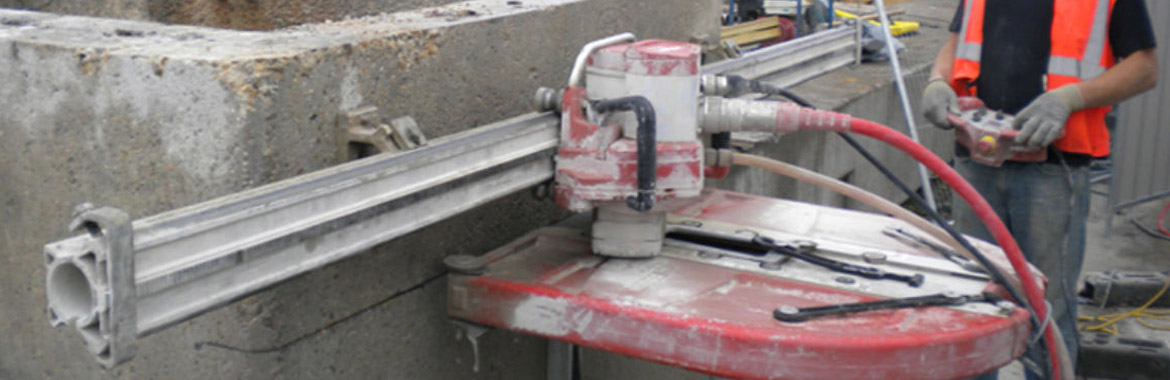
Diamond drilling is a specialist cutting way that uses drill bits fitted with industrial-grade diamond segments to bore through some of the hardest materials you’ll see on a construction site. This includes reinforced concrete block work, brick, natural stone and yes even asphalt.
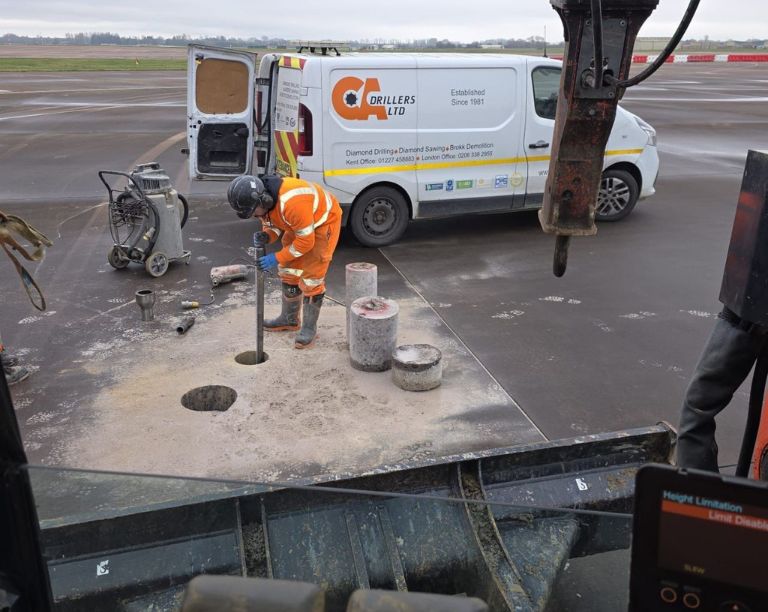
Now, unlike standard drilling methods, diamond drilling is really a core drilling process… so it takes out a cylindrical plug of material from the substrate, rather than just churning dust and fragments. That’s why you end up with exceptionally clean, accurate holes, smooth edges, and virtually no vibration impact to the nearby structure.
So it tends to be the go-to choice on jobs where precision, structural integrity and reduced dust levels are absolutely non-negotiable. In a busy urban place like London, that’s almost always the case, really.
Where Is Diamond Drilling Used in London?
London’s building stock is hugely varied — Victorian terraces, Edwardian mansion blocks, post-war concrete estates, and shiny new business towers all sit side by side. Diamond drilling services get called in across these places for a whole host of tasks, really, in practice:
Cable and pipe penetrations — making tidy passages for electrical conduit plumbing, data cabling and HVAC systems through concrete or masonry walls, plus floors
CCTV and security fittings — drilling through outside walls, without disturbing the surrounding finishes , too
Structural openings — creating fresh doorways windows, or service apertures in load-bearing walls, carefully
Drainage and waste pipe routes — especially in basement changes and loft extensions, where the older concrete slabs must be pierced
Underpinning and foundation duties — drilling anchor holes or installing tie-back systems
Party wall jobs — where accuracy matters , so you don’t harm a neighbour’s property
Tunnelling and civil engineering projects — spanning the TfL network , utilities, and Crossrail-linked infrastructure
And because London is built so densely, diamond drilling near you has to be handled by teams who understand the inner-city access issues, the noise rules, and the working hours laid down by local councils and planning requirements, as well.
Why Diamond Drilling Is Preferred Over Other Methods
Some clients ask, “why shouldn’t we just use a standard SDS, or even a rotary hammer drill for our job.” And yeah, in a pinch it can seem ok, but diamond drilling is the more pro, proper choice, really.
Precision, for one. Diamond drilling makes holes with exact diameters — from 10 mm and up to 1,000 mm and even more — with tolerances of only about one or two millimetres. That kind of accuracy matters a lot when you’re fitting pipe sleeves or structural fixings, where “close enough” just doesn’t work.
Then there’s the vibration thing. Percussive drilling, the pounding style, can create micro fractures in the surrounding concrete. Diamond drilling on the other hand is basically vibration free, so the structure’s integrity stays intact and you’re less likely to end up with those annoying damage claims.
Also, speed. When you’re cutting reinforced concrete, a diamond drill typically works way faster than a conventional drill. Less fiddling means less labour time, which helps keep programme costs under control.
Dust management is another big one. Proper diamond drilling services use wet drilling systems that calm dust right at the source. That’s especially important in occupied buildings, in listed structures, or anywhere near sensitive equipment, materials, or people who really don’t want a mess.
Finally, versatility. Diamond drilling can get through steel reinforced concrete, post pensioned slabs, natural stone, and layered make ups that would chew up conventional drill bits in seconds. So it’s not just “one job, one drill,” it’s a broader tool for real site conditions.
What to Look for When Hiring a Diamond Drilling Contractor in London
Not all diamond drilling contractors are, really, the same . Here’s what , before you sign anything, you should look at , in real terms:
Relevant experience, and proper accreditations
Check how long they’ve been operating, and what exact kinds of jobs they’ve completed. A solid firm should be able to show experience across both domestic and commercial work. Also check for membership of industry organisations like the Construction Industry Training Board (CITB) and whether their operatives have a valid CSCS card.
Insurance
You should always confirm the contractor has public liability cover ideally to at least £5 million , plus employer’s liability. In London, where party wall matters and tightly neighbouring buildings are common , this is not a “nice to have”.
A clear written quote
A professional contractor will provide a detailed written quotation, not something rushed . It should spell out the number of cores, their diameter , how deep they’ll be, plus any scanning needs, method statements, and how waste will be removed. Be careful with verbal pricing or loose “ballpark” estimates.
Concrete scanning
Before any diamond drilling starts in an existing structure, the surface should be scanned to find hidden services—things like gas pipework, electric cables, and post-tensioned tendons. A reliable contractor will either include this as standard or explain, clearly and upfront, what you are expected to arrange.
Dust and water management
London jobs , especially those inside occupied places or commercial premises , need good slurry and dust control. Ask how they manage wet drilling water and the debris. Responsible contractors will capture, contain, and remove slurry rather than letting it go straight into drains.
Method statements and risk assessments
A proper diamond drilling business should be able to produce a site specific method statement and, separately if needed , the relevant risk assessments, so you know exactly how they plan to work and keep things controlled.
How Much Does Diamond Drilling Cost in London?
Pricing can change a bit depending on a few things, like some contractors etc, honestly it isn’t always the same:
The number of holes most drillers set the price per core, and if you’re doing a larger quantity they may offer some volume discounts, sometimes.
Diameter and depth — bigger cores plus deeper cutting usually take more time and more tooling, so the bill moves up.
Material — if it’s heavily reinforced concrete, drilling is often more expensive than block work, naturally.
Access — awkward access, like basements, restricted sites, or work on high-rise floors can add cost, because more planning is needed.
Scanning — GPR surveys (before drilling) are usually charged separately too, so don’t assume it’s included.
In London, for a straightforward domestic diamond drilling job you might expect something close to £150–£250 as a starting point, then it can climb a lot once it’s commercial, structural, or a larger scale order. In other words, always ask for a quote that fits your exact site, rather than trusting generic online numbers.
At CA Drillers , we issue transparent, line item quotes with no surprise add-ons. That way you can see what you’re paying for before any single hole gets drilled.
Why Choose CA Drillers for Diamond Drilling in London?
At CA Drillers , we kind of bring together technical know-how, modern gear, and a real kind of commitment to getting the job done right. We cover all London boroughs, from the central bits in Westminster and the City to more suburban schemes in Enfield, Bromley , and beyond
Our operatives are experienced, fully insured, and kitted out with the latest diamond drilling rigs which can deal with any size project— from just one cable penetration in a domestic property to bigger commercial coring programs.
We also do full pre-drill scanning as standard on reinforced concrete structures, making sure we never mess with the integrity of your building and also not put hidden services at risk, you know.
Whether you found us by searching for diamond drilling near me, got pointed our way by a contractor, or contacted us straight, you’ll get the same high standard of service and solid, no-nonsense professional advice.
Get in Touch with CA Drillers Today
If you’re after reliable, professional diamond drilling services in London , CA Drillers is ready to help. Reach out today for a free, no obligation quote, and let the team figure out exactly what your project calls for.
Because when it comes to carving through concrete in London, precision isn’t optional — it’s a requirement.
Frequently Asked Questions About Diamond Drilling in London
Q1: What is diamond drilling and how does it differ from standard drilling?
Diamond drilling uses drill bits tipped with industrial diamond segments to core through hard materials such as reinforced concrete, brick, and natural stone. Unlike standard percussive or rotary hammer drilling, it produces clean, accurately sized holes with minimal vibration and virtually no structural damage to surrounding material. It is the method of choice wherever precision and structural integrity matter.
Q2: How do I find a reliable diamond drilling contractor near me in London?
Start by searching diamond drilling near me and then vet the results carefully. Look for contractors with verifiable experience, a valid CSCS card, public liability insurance of at least £5 million, and the ability to provide written method statements and risk assessments. Reading Google reviews and asking for references from recent London projects will also give you a clearer picture of the contractor's track record.
Q3: Is diamond drilling suitable for domestic properties in London?
Absolutely. Diamond drilling is widely used in domestic settings across London — from drilling through concrete floors for new waste pipe runs during bathroom renovations, to creating cable penetrations through external brick walls for air conditioning units or EV charger installations. Because it is low-vibration and dust-suppressed, it is well suited to occupied homes.
Q4: Will diamond drilling damage the surrounding structure?
When carried out correctly by a trained operative, diamond drilling causes no damage to the surrounding substrate. The process is virtually vibration-free, which is why it is preferred over percussive methods on listed buildings, party wall situations, and anywhere near sensitive finishes. Pre-drill GPR scanning ensures hidden reinforcement and services are identified before any cutting begins.
Q5: Do I need planning permission for diamond drilling works in London?
In most cases, no. Diamond drilling is typically a method of executing works rather than a permitted development in its own right. However, if the works involve structural alterations — such as forming a new opening in a load-bearing wall — you will need Building Regulations approval, and if a party wall is involved, a Party Wall Agreement under the Party Wall etc. Act 1996 may be required. Your contractor should be able to advise you, and Ca Drillers always flags these requirements at the quotation stage.
- Search
- Categories
- Blog
- Brokk demolition
- Certificate
- Concrete Cutting
- Controlled Demolition
- Core Drilling
- core drilling Kent
- Diamond Concrete Cutting
- Diamond Concrete Drilling
- Diamond Drilling
- Diamond Drilling Essex
- Diamond drilling Kent
- Diamond Drilling Surrey
- Diamond Sawing
- Fire doors
- Floor Preparation
- Hydraulic Bursting
- Kent construction drilling
- Magnetic Drilling
- Passive Fire Protection
- Stitch Drilling
- Wire Sawing Services
- Archives