
Everything You Need to Know Before Hiring a Diamond Drilling Contractor ?
Everything You Need to Know Before Hiring a Diamond Drilling Contractor ?
Whether you’re a principal contractor running a big commercial fit-out, a developer juggling a basement conversion, or a facilities manager sorting out utility upgrades inside an occupied building, sooner or later you’re going to need to create accurate holes through concrete masonry, or reinforced structures. That’s where diamond drilling really starts to matter… and honestly, the contractor you pick can make or break the whole programme.
At CA Drillers, we’ve worked with clients all over London, Kent, Surrey, and Essex for decades. We’ve done precision drilling on everything from Crossrail infrastructure, to heritage buildings sat in conservation zones. Over the years we’ve watched what happens when people hire the wrong contractor too, delays, damaged reinforcement, non compliance, and expensive remediation tend to show up much more than they should. Sometimes it’s not even just the time, it’s the knock on issues that catch you later.
So this guide lays out what you actually need to consider before hiring a diamond drilling contractor, so you can decide properly from day one and avoid the “we’ll sort it later” situation.
What Is Diamond Drilling and Why Does It Matter?
Diamond drilling is a kinda specialist thing, it uses diamond-tipped core bits to slice through reinforced concrete , brick stone masonry and similar material with this really consistent accuracy. And unlike percussive methods it creates virtually no vibration and minimal noise , plus when it’s paired with wet-cutting technology, it becomes near zero airborne dust.
That set up matters a lot for modern UK construction sites . Noise limits, dust control rules, Party Wall obligations, and also just the density of existing services running through structural elements , means the concrete core drilling really has to be spot on from the beginning. If a core hole is put 50mm in the wrong direction, it can sever a post-tension cable , it may breach a concealed conduit, or quietly compromise the structural integrity of a slab. Those outcomes get pricey, they’re hazardous , and honestly they’re entirely preventable if you plan properly.
Verify Accreditations and Compliance Credentials
The first question, really, to ask any potential contractor is kind of simple… are you properly accredited?
In the UK, a reputable and experienced drilling contractor should have CSCS cards for all operatives, carry public liability insurance of at least £5 million and be registered with a recognised safety scheme like CHAS, Constructionline, or SafeContractor. Also, if they are working in rail environments, then they should additionally carry RISQS accreditation.
At CA Drillers, we hold ISO 9001, ISO 14001 and ISO 45001 certifications, plus CHAS Elite status, Constructionline Gold and RISQS accreditation. This isn’t just box-ticking , you know. It signals our focus on drilling safety, environmental management and steady quality control on every single job.
Always ask to see the certificates. If a contractor is vague about their accreditations, or hands over old, outdated paperwork, that should set off a big red flag straight away.
Insist on Concrete Scanning Before Any Drilling Begins
No proper contractor should just drop a core bit into any slab , wall , or floor until they actually get to grips with what is sitting underneath that surface. Concrete core drilling without scanning first is one of the most frequent — and usually the most expensive — missteps you’ll see on worksites.
These days the smarter precision drilling starts with ground penetrating radar, you know, the GPR scan. It helps pinpoint where the rebar is, where post tension cables are running, plus conduits , water pipes , and the electrical services that are hidden inside the structure. Without that map, even a very seasoned operative is basically moving by guesswork.
At CA Drillers, we treat concrete scanning as routine before we drill any hole. It safeguards the build, keeps the programme on track, and makes sure our structural drilling lines up with what the project’s structural engineer is asking for. If the contractor you’re thinking about doesn’t even mention scanning as part of what they do, ask them straight out. And if they play it down, then honestly it’s worth rethinking the choice.
Assess Their Equipment and Technical Capability
Not every diamond drilling rig is the same. The range of jobs you hit on a modern building site— from wall drilling and floor drilling, through to utility work inside tight plant rooms , or reinforced concrete drilling on deeper basement structures — needs a contractor who has a broad assortment of current drilling equipment, plus the know how to use it properly, day in day out.
A few key things to ask are pretty simple. What rig sizes do you actually run? Can you work in confined or restricted areas? Do you have track mounted systems for overhead drilling or horizontal drilling? And what’s your maximum core diameter , like really maximum not “best case”?
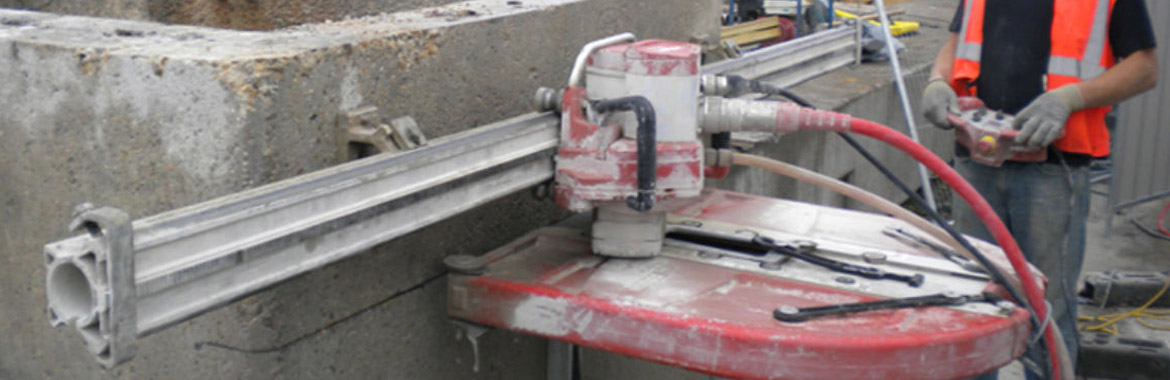
A contractor with just one drill, and a small pile of core bits , usually isn’t set up for the real complexity of most commercial builds or infrastructure jobs. CA Drillers runs a full fleet of track rigs, hand-held rigs, and hydraulic systems able to drill diameters from 12mm all the way up to 1,000mm. Our construction drilling specialists are trained for the whole set of tasks, including stitch drilling for bigger openings, duct penetrations , and structural tie-back installations.
Understand the Dust-Free and Low-Vibration Benefits — and Confirm They Apply
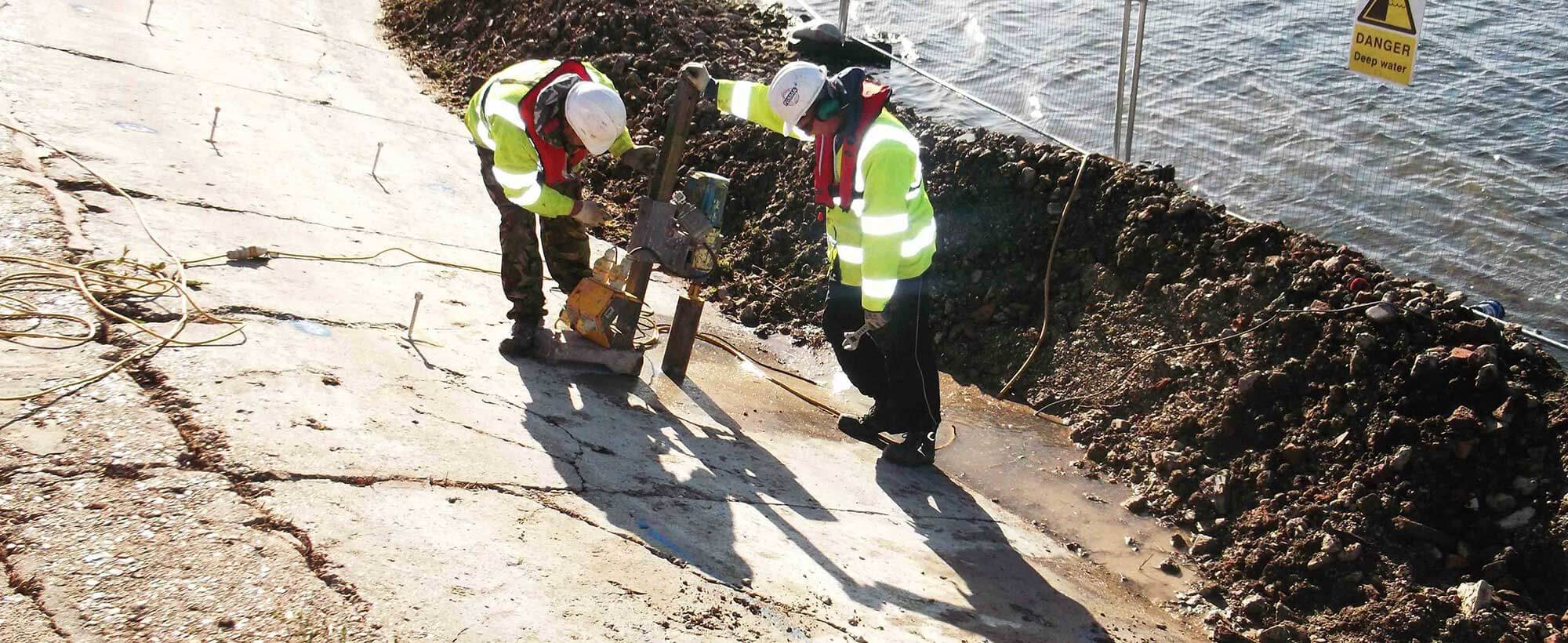
One of the more significant advantages of professional diamond drilling is that it can be done in occupied or sensitive places, without causing much disruption at all, you know. The wet-cut approach suppresses dust entirely , keeps noise levels at a sensible range and it also removes the vibration you usually get from percussive methods.
But honestly these upsides only show up when the job is carried out properly. “Dust-free” drilling really depends on good water management, vacuum extraction systems and also correctly maintained equipment. If a contractor cuts corners on the water supply or doesn’t arrange extraction in the right way, you might end up with slurry pushed around on the finished floor, then later a remediation headache shows up that you never expected.
Before you engage any contractor, ask very directly how they handle water and slurry on site. Ask for proof of their dust control and waste handling procedures. At CA Drillers, our COSHH paperwork, method statements and water management plans are treated as standard on every single project, and they’re provided to the principal contractor before we mobilise.
Review Their Track Record on Comparable Projects
Experience really does count. Diamond drilling through a 200mm domestic partition wall is a totally different game from putting cores through a 1,200mm post tensioned transfer slab, especially inside a high rise development. A contractor that has only ever done fairly straightforward domestic jobs or light commercial bits might not quite have the judgement, the right gear, or the planning know-how needed for anything that’s structurally complex.
So, ask for case studies, or even references, from projects that sit at about the same scale and difficulty level as yours. Pay attention to whether they’ve handled structural drilling on occupied sites. Also check if they’ve worked inside live hospital or school environments, drilled near heritage buildings, and whether their method is done under the oversight of structural engineers, particularly where timing is programme critical for infrastructure works.
CA Drillers have delivered diamond drilling contracts for Crossrail, MACE, BAM Construction, Costain, Ardmore and FM Conway, among others, plus work at Chelsea Barracks, London City Airport, the National Gallery and the Silvertown Tunnel. That wide spread experience means our teams have met, and sorted out, almost every kind of issue that can turn up in a complex drilling programme.
Confirm Response Times and Programme Flexibility
Construction programmes are rarely static , things move a lot. Drilling requirements can shift once new design info comes out later than planned , or when structural surveys turn up unexpected conditions, or simply because other trades slip behind schedule and it turns into a tight window for your work. If a contractor can’t mobilise quickly, or if they do not have enough resources to flex their crew at short notice , they end up bottlenecking the whole programme.
Before awarding any contract , make it crystal clear, well in advance, how fast they can mobilise in the real world. What is their typical lead time to get things moving? Do they have an emergency call out option? Also , can they supply extra operatives or additional equipment at short notice if the schedule compresses?
CA Drillers provides same day emergency response for programme critical issues across our London, Kent , and Surrey coverage areas. Our project management team stays in touch proactively throughout every project, so our clients aren’t left twiddling their thumbs for updates.
Making the Right Choice
Choosing a diamond drilling contractor isn’t really just, about grabbing the lowest price from some comparison sheet. Honestly the cost of picking the wrong team—through delays , extra remediation, compliance hiccups, and reputational worry—will almost always land higher than that first little saving.
A good contractor instead brings the full accreditation you expect, dependable scanning capability, a well rounded equipment fleet, real project experience, and a drilling safety mindset that aligns with your own requirements, not just something written on paper.
So if you’re planning work that needs concrete core drilling, wall drilling, floor drilling, utility drilling, or any sort of structural drilling through reinforced concrete, or masonry, talk with the team at CA Drillers today. We offer free consultations, fast site surveys, and competitive quotations for jobs of all sizes, from single penetration tasks to bigger multi-trade drilling programmes.
Frequently Asked Questions
How do I know if a diamond drilling contractor is qualified to work on my site?
Check for CSCS-certified operatives, public liability insurance of at least £5 million, and registration with a recognised scheme such as CHAS, Constructionline, or SafeContractor. For rail or infrastructure projects, RISQS accreditation is also essential. CA Drillers holds all of these alongside ISO 9001, ISO 14001, and ISO 45001 certifications.
Is concrete scanning always necessary before diamond drilling begins?
Yes — without exception. Ground-penetrating radar (GPR) scanning identifies hidden rebar, post-tension cables, conduits, and pipework before any core bit touches the structure. Skipping this step risks severing embedded services, damaging structural reinforcement, and creating costly delays. At CA Drillers, scanning is standard on every project before drilling commences.
Q3. Can diamond drilling be carried out in occupied buildings?
Absolutely. Diamond drilling is one of the few construction methods suitable for occupied environments. The wet-cut process suppresses dust entirely, keeps noise to a minimum, and produces negligible vibration — making it safe for use in hospitals, schools, offices, and residential buildings without requiring occupants to vacate the premises.
Q4. What materials can be drilled using diamond drilling?
Diamond drilling works effectively through reinforced concrete, post-tensioned slabs, brick, masonry, stone, and most composite structural materials. The technique is equally suited to wall drilling, floor drilling, ceiling penetrations, and utility drilling through service cores — regardless of material thickness or reinforcement density.
Q5. What core hole sizes are available with diamond drilling?
Core diameters typically range from 12mm up to 1,000mm, depending on the rig and bit specification. CA Drillers operates a full fleet of track rigs, hand-held rigs, and hydraulic systems covering this entire range, including stitch drilling for large structural openings that exceed standard core sizes.
- Search
- Categories
- Blog
- Brokk demolition
- Certificate
- Concrete Cutting
- Controlled Demolition
- Core Drilling
- core drilling Kent
- Diamond Concrete Cutting
- Diamond Concrete Drilling
- Diamond Drilling
- Diamond Drilling Essex
- Diamond drilling Kent
- Diamond Drilling Surrey
- Diamond Sawing
- Fire doors
- Floor Preparation
- Hydraulic Bursting
- Kent construction drilling
- Magnetic Drilling
- Passive Fire Protection
- Stitch Drilling
- Wire Sawing Services
- Archives