
Planning Precision Drilling Around Active Construction Sites: What Contractors Need to Consider
Planning Precision Drilling Around Active Construction Sites: What Contractors Need to Consider
Objective
This guide explains how contractors can plan precision drilling around active construction sites while protecting workers, structures, existing services and project schedules.
Key Takeaways
- Check the structure and existing services before drilling.
- Coordinate drilling with other trades and the site programme.
- Choose the right diamond drilling method for the opening required.
- Control dust, water, slurry, noise and vibration.
- Use competent professional diamond drilling services in London for complex commercial work.
Introduction
Precision drilling on an active construction site is not simply about creating a clean hole in concrete. You also need to consider the structure, hidden services, access, nearby trades, dust, vibration and the project schedule before work begins. This becomes even more important on busy commercial and infrastructure projects, where one poorly planned drilling operation can affect the work around it. Professional diamond drilling services in London can help contractors plan accurate openings while keeping the wider site requirements in view. CA Drillers has delivered specialist drilling and concrete cutting work across commercial construction, civil engineering, rail and infrastructure projects in London and across the UK.
Did you know? HSE states that drilling concrete can create respirable crystalline silica dust, which can cause serious lung disease. Proper planning and suitable dust controls are therefore an essential part of the job.
Table of Contents
- Assess the Site Before Drilling
- Check the Structure and Existing Services
- Coordinate Drilling With Other Trades
- Choose the Right Drilling Method
- Control Site Risks
- Select the Right Drilling Contractor
- Practical Pre-Drilling Checklist
- FAQs
1. Assess the Construction Site Before Drilling
Before any drilling starts, look at the whole work area rather than only the concrete section that needs an opening.
Check access routes, working space, nearby plant, temporary structures, floor levels and the location of other teams. Confirm the required hole diameter, drilling depth and exact position with the relevant project team.
Under the Construction (Design and Management) Regulations 2015, the principal contractor must plan, manage and monitor the construction phase and coordinate health and safety matters. The regulations also require cooperation between contractors working on the same project.
For diamond drilling services for active construction sites, this wider site review is essential because drilling rarely happens in isolation.
2. Check the Structure and Existing Services
The next step is to understand what sits inside or behind the concrete.
Review the available information.
Check structural drawings, concrete thickness, previous alterations and the location of slabs, beams and other structural elements.
Check for embedded services.
Before drilling, establish whether the proposed area contains electrical, mechanical or plumbing services. Reinforcement and other embedded elements also need consideration.
Confirm the drilling point.
Do not rely on an old drawing if site conditions have changed. Confirm the location before work starts and raise any uncertainty with the appropriate project professional.
This matters particularly when you need diamond drilling for construction projects, where accuracy can affect later M&E installation and other trades.
3. Coordinate Drilling With Other Trades
A good drilling plan fits the wider construction schedule.
Suppose an M&E team needs several penetrations through a concrete slab. If drilling takes place after ducts or finished surfaces are installed, access may become harder, and the work may create avoidable delays.
Coordinate with:
- M&E contractors
- Electricians and plumbers
- Structural teams
- Fit-out contractors
- Site management
- Other specialist subcontractors
The CDM Regulations require principal contractors to consider how work stages take place simultaneously or in sequence and to organise cooperation between contractors.
That means drilling should have a clear place in the site programme, not be treated as a last-minute task.
4. Choose the Right Drilling Method
The drilling method should match the concrete, opening size, depth, access and project requirements.
Diamond core drilling is useful where you need accurate circular openings for pipes, cables and other building services. For larger or more complex concrete work, other specialist cutting methods may be more suitable.
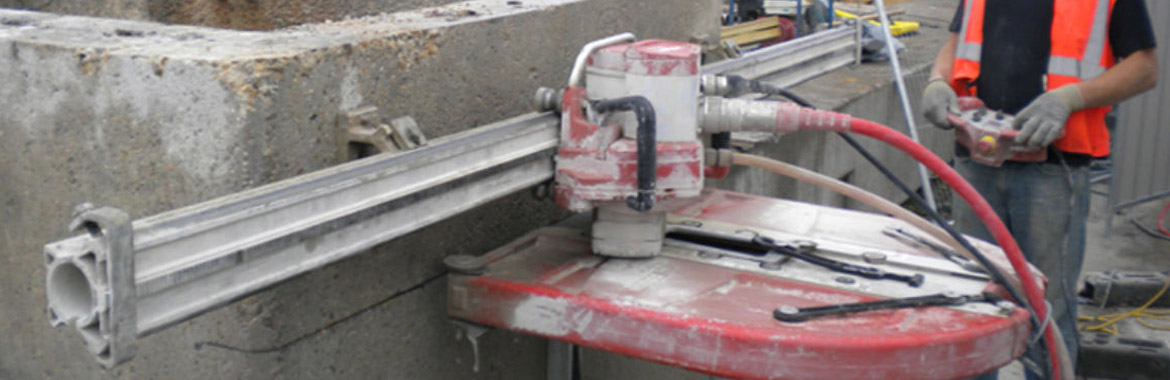
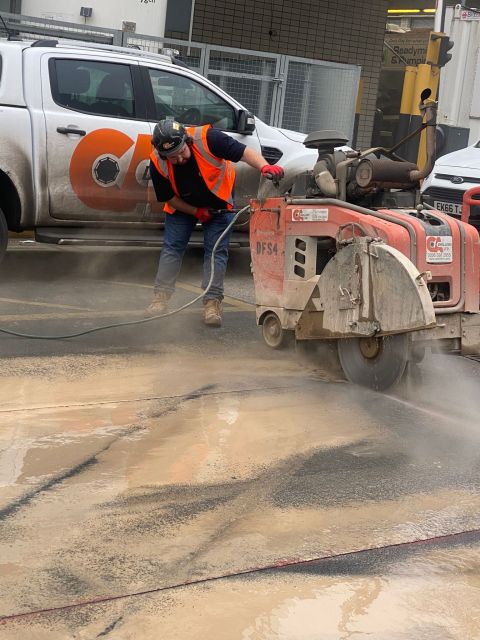
CA Drillers has carried out diamond drilling, track sawing and other concrete works across commercial and infrastructure projects. Its Paddington New Yard project shows why method selection matters. Heavy breaking was restricted because much of the site was above the Crossrail tunnel, so diamond floor sawing, diamond track sawing and hydraulic bursting were used instead.
For concrete drilling services for commercial projects, the correct method can help keep the work controlled while other site activities continue.
5. Control Dust, Water and Vibration
Safety planning must cover more than the drill itself.
HSE guidance for diamond coring recommends suitable equipment, the correct diamond bit and water suppression for wet coring. It also advises contractors to plan how slurry will be controlled and to clean the work area promptly.
Control silica dust
Concrete drilling can produce respirable crystalline silica dust. Use the appropriate control measures for the task rather than allowing dust to spread around an active work area.
Manage slurry
Wet drilling can create slurry that becomes a slip hazard or enters unwanted areas. Plan containment and clean-up before drilling begins.
Consider vibration
Vibration matters when drilling takes place near sensitive structures, occupied areas or critical infrastructure. The Paddington New Yard project is a useful example of how site conditions can affect method selection.
6. Select the Right Drilling Contractor
Price matters, but it should not be your only consideration.
Ask whether the contractor has relevant experience, competent operatives, suitable equipment and experience working within live construction programmes.
For complex London projects, professional diamond drilling services in London should be able to discuss the proposed opening, site access, drilling method, safety controls and programme before work begins.
CA Drillers has documented work on major infrastructure and commercial projects, including Paddington New Yard, which gives contractors a useful example of specialist drilling and concrete work in a demanding live project environment.
7. Your Pre-Drilling Checklist
Before the drill arrives, confirm:
| Check | What to Confirm |
| Location | Exact drilling point approved |
| Structure | Drawings and concrete details reviewed |
| Services | Existing services and embedded elements checked |
| Access | Equipment and operator access available |
| Programme | Other trades informed |
| Safety | Relevant plan, controls and exclusion area arranged |
| Dust | Suitable control method selected |
| Slurry | Collection and clean-up planned |
| Equipment | Correct drill and bit selected |
Practical tip: If the drilling position, access or site conditions are unclear, stop and resolve the issue before work starts.
Plan the Drilling Before You Start the Drill
Precision drilling works best when it forms part of the construction plan from the start. Check the structure, confirm services, coordinate other trades and select equipment that suits the actual site conditions.
For complex commercial or infrastructure work, professional diamond drilling services in London can help you assess the drilling requirements and plan the work around your programme.
If you are planning a drilling package, speak with CA Drillers about your project requirements and request a quotation based on the site conditions, required openings and planned programme.
FAQ
Is diamond drilling suitable for active construction sites?
Yes. It can be suitable where accurate openings and controlled concrete removal are required, provided the work is properly planned and carried out with suitable controls.
What should contractors check before concrete drilling?
Review the structure, drilling position, existing services, access, equipment requirements, site programme and relevant safety arrangements.
Why is diamond core drilling used for building services?
It can create accurate circular openings for pipes, cables and other services through concrete and other suitable materials.
How should contractors control slurry during wet drilling?
Plan containment before work starts, protect nearby areas and clean the work area promptly. HSE specifically advises contractors to consider slurry control during wet diamond coring.
How do you choose a drilling contractor in London?
Look for relevant project experience, competent workers, suitable equipment and evidence that the contractor can work safely within an active construction programme.
- Search
- Categories
- Blog
- Brokk demolition
- Certificate
- Concrete Cutting
- Controlled Demolition
- Core Drilling
- core drilling Kent
- Diamond Concrete Cutting
- Diamond Concrete Drilling
- Diamond Drilling
- Diamond Drilling Essex
- Diamond drilling Kent
- Diamond Drilling Surrey
- Diamond Sawing
- Fire doors
- Floor Preparation
- Hydraulic Bursting
- Kent construction drilling
- Magnetic Drilling
- Passive Fire Protection
- Stitch Drilling
- Wire Sawing Services
- Archives