
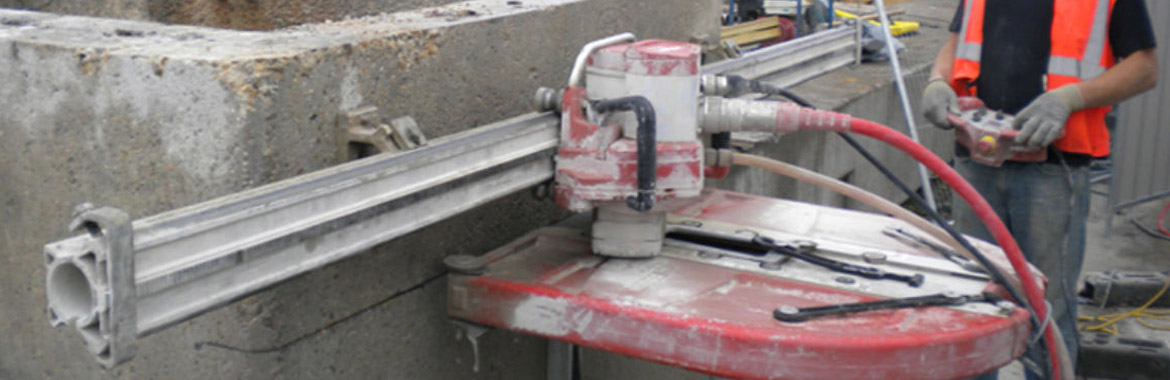
Why Diamond Drilling Is the Safest Method for Concrete Cutting in 2026 ?
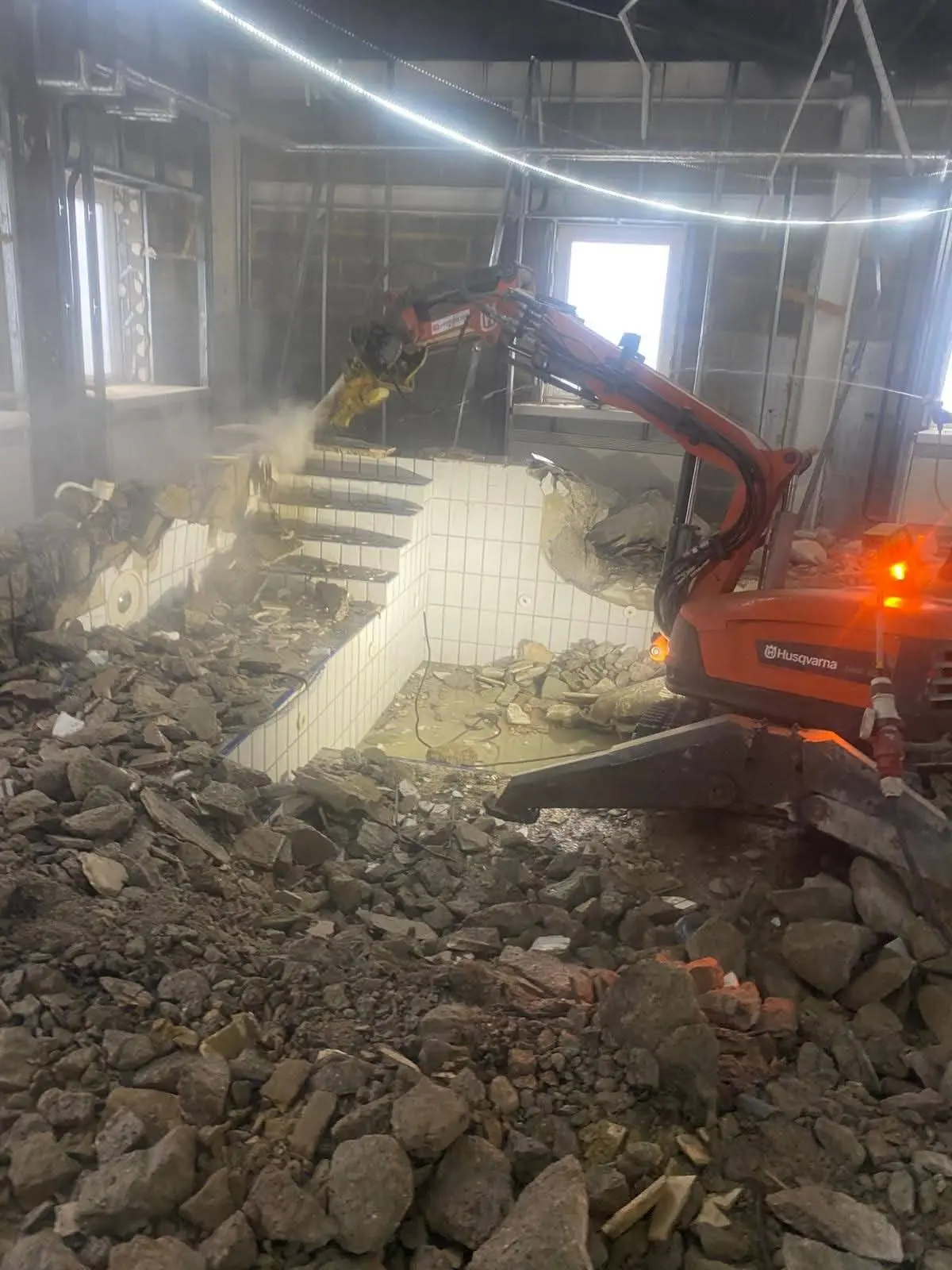
Why Diamond Drilling Is the Safest Method for Concrete Cutting in 2026 ?
Objective
This guide explains, in clear and practical terms, why Diamond Drilling is widely regarded as the safest method for concrete cutting in 2026. Our study examines concrete cutting safety and accuracy together with regulatory compliance and actual construction site operations which include reinforced concrete work under live construction conditions and strict project deadlines.
Key Takeaways
- Why modern construction demands safer concrete cutting methods
- How diamond drilling protects reinforced concrete structures
- What makes precision concrete cutting safer for workers and occupied buildings
- When diamond drilling is the safest choice
- Why professional diamond drilling services reduce risk and project delays
Introduction
One incorrect method of cutting concrete will endanger all parts of a building and create safety hazards for people present. Concrete cutting in 2026 has become more difficult than any previous time period. The current building designs feature increased density and stronger structural support while people use the buildings during construction work. The use of unsafe concrete drilling methods creates project delays. The method can damage structural components and create hidden cracks while producing hazardous dust and vibration conditions for workers.
Concrete cutting safety now serves as a compliance requirement because it exceeds standard best practices for the industry.
High-vibration cutting methods create micro-fractures in reinforced concrete according to research evidence. The safety data from the industry shows that low-vibration drilling methods produce lower structural stress levels and decrease the danger of accidents on construction sites.
The need for Diamond Drilling as the main method for dangerous concrete cutting operations in 2026 stems from this particular situation.
Table of Contents
- Understanding the Challenges of Concrete Cutting in 2026
- Why Precision Concrete Cutting Improves Safety Outcomes
- How Diamond Drilling Reduces On-Site Safety Risks
- Safe Concrete Drilling Methods for Modern Construction Sites
- Real-World Applications in High-Risk Projects
- When Diamond Drilling Is the Safest Choice
- Industry Insight
- Frequently Asked Questions
Understanding the Challenges of Concrete Cutting in 2026
Modern construction sites operate as dangerous work areas. The combination of intricate building designs and strict safety regulations and active construction sites creates more dangerous conditions.
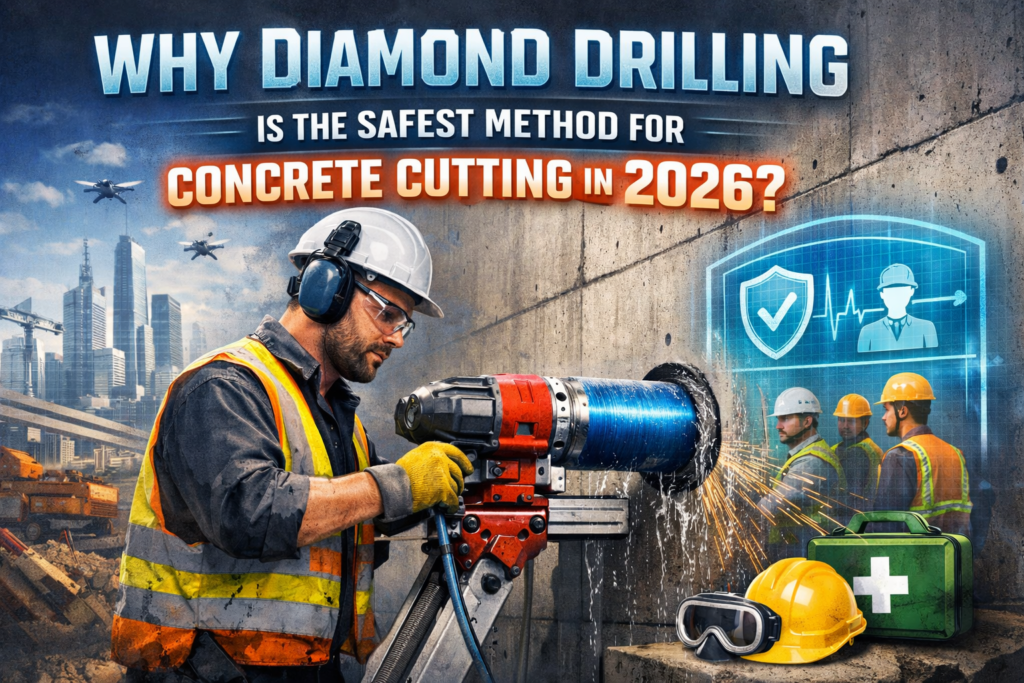
Structural Integrity Risks in Reinforced Concrete
Reinforced concrete uses steel reinforcement to distribute weight throughout its floors and columns and walls. Traditional impact drilling methods transfer shock into the structure, increasing the risk of cracking and weakening key load-bearing sections.
Live Environments and Operational Buildings
Hospitals and commercial offices and transport hubs and residential towers maintain their operations during cutting activities. The excessive combination of dust and noise and vibration interrupts work progress and harms the project’s reputation and results in safety violations.
Why Traditional Cutting Methods Fall Short
Older concrete cutting techniques rely on brute force rather than control. The procedure generates uncontrolled cracking together with excessive dust and creates holes with different sizes which results in increased risks and higher costs to clean and delays in work completion.
Why Precision Concrete Cutting Improves Safety Outcomes ?
The process of cutting concrete requires safe execution during all stages of the operation. The combination of diamond-tipped tools with precision concrete cutting creates clean openings which develop predictable results without damaging nearby structures. The process of drilling high-density reinforced concrete achieves stable results which maintain precise accuracy.
- The system includes two main functions which enable drilling operations while protecting building foundations.
- Diamond drilling produces minimal vibration which protects surrounding concrete and stops micro-fractures from developing in load-bearing structures.
- The system cuts holes to precise dimensions which safeguard surrounding materials while stopping all expensive repair needs.
- Professional diamond drilling services enable exact drilling around steel reinforcement and electrical conduits and pipework which protects both the building and its occupants.
How Diamond Drilling Reduces On-Site Safety Risks ?
The foundation of structural safety requires additional measures because worker health and site safety hold equal importance.
Dust Control and Improved Air Quality
Water-assisted diamond drilling decreases fine concrete dust emissions which contain dangerous silica particles. The process leads to better air quality which protects people from respiratory hazards.
Noise Reduction for Sensitive Environments
Diamond drilling produces less noise than traditional impact methods which allows its use in hospitals, offices and residential buildings.
Improved Operator Control and Predictability
The operators achieve better control through stable rigs which enable smooth cutting. This cutting technique decreases the chances of tool slippage and fatigue-related mistakes while reducing accident risk.
Safe Concrete Drilling Methods for Modern Construction Sites
The safe concrete drilling methods of 2026 establish three main requirements which need proper planning, exact implementation, and effective risk management. Diamond drilling meets all requirements of contemporary safety regulations.
- Health and Safety Regulations must be followed through their entire duration
- Professional diamond drilling services operate under strict risk assessments, method statements, and trained supervision, ensuring compliance with current safety regulations.
- The system functions in both active operational zones and live environments.
- Diamond drilling produces minimal noise and dust while providing restricted entry, which makes it suitable for use in both occupied buildings and active construction areas.
- Specialist Contractors play an essential role because their experience enables them to assess load paths and drilling locations and reinforcement layouts before cutting starts. This planning prevents structural damage and site incidents.
Real-World Applications in High-Risk Projects
Diamond drilling proves its value in complex sites which need to maintain their safety standards.
Working in Confined and Restricted Spaces
The design of plant rooms and basements and service shafts creates conditions which demand absolute accuracy. The combination of compact rigs and precision cutting methods enables safe drilling operations within narrow spaces.
The Process of Maintaining Building Safety During Structural Changes
Refurbishment projects need new service paths to be built through already existing concrete. Diamond drilling enables structural changes to be made without affecting the building’s ability to support its weight.
Lessons from Commercial and Infrastructure Projects
High-risk commercial and infrastructure works depend on diamond drilling to achieve project deadlines while upholding safety standards and legal requirements.
When Diamond Drilling Is the Safest Choice ?
Diamond drilling becomes necessary for work on:
- Load-bearing walls and floors
- Reinforced and post-tensioned concrete
- Projects requiring precision concrete cutting
- Live environments with safety constraints
Industry Insight
- Experienced engineers hold the following opinion which they see as a straightforward matter:
- Modern construction achieves its safety standards through the use of precise methods which require detailed planning and effective project control.
- The year 2026 established diamond drilling as the preferred method for handling high-risk concrete cutting operations.
Why 2026 Demands Smarter Concrete Cutting
The 2026 construction schedule requires complete accuracy without any possibility of uncertainty. Diamond drilling provides three main benefits to construction projects through its ability to protect structures and create safe work environments while delivering dependable results that prevent expensive errors. The world now recognizes precision concrete cutting as the primary method used to ensure safe concrete drilling operations throughout the globe.
Contact CA Drillers today for expert Diamond Drilling and safe concrete cutting solutions.
Frequently Asked Questions
Is diamond drilling safer than traditional concrete cutting?
Yes. It produces less vibration, offers better control, and reduces structural and worker risk.
Can diamond drilling damage reinforced concrete?
No. When done correctly, it protects reinforced concrete by cutting cleanly around steel reinforcement.
Is diamond drilling suitable for occupied buildings?
Yes. Low noise and dust make it ideal for live environments.
How accurate is diamond drilling?
It delivers precise hole sizes and clean finishes, reducing the need for corrective work.
Does diamond drilling meet modern safety standards?
Yes. When carried out by trained professionals, it aligns with current health and safety requirements.
- Search
- Categories
- Blog
- Brokk demolition
- Certificate
- Concrete Cutting
- Controlled Demolition
- Core Drilling
- Diamond Concrete Cutting
- Diamond Concrete Drilling
- Diamond Drilling
- Diamond Drilling Essex
- Diamond drilling Kent
- diamond drilling london
- Diamond Drilling Surrey
- Diamond Sawing
- Fire doors
- Floor Preparation
- Hydraulic Bursting
- Magnetic Drilling
- Passive Fire Protection
- Stitch Drilling
- Wire Sawing Services
- Archives